Budapest to Vienna: Train, Bus and the Boat That No Longer Runs
Updated September 2026 · Checked against MÁV, ÖBB and MAHART, not copied from other guides
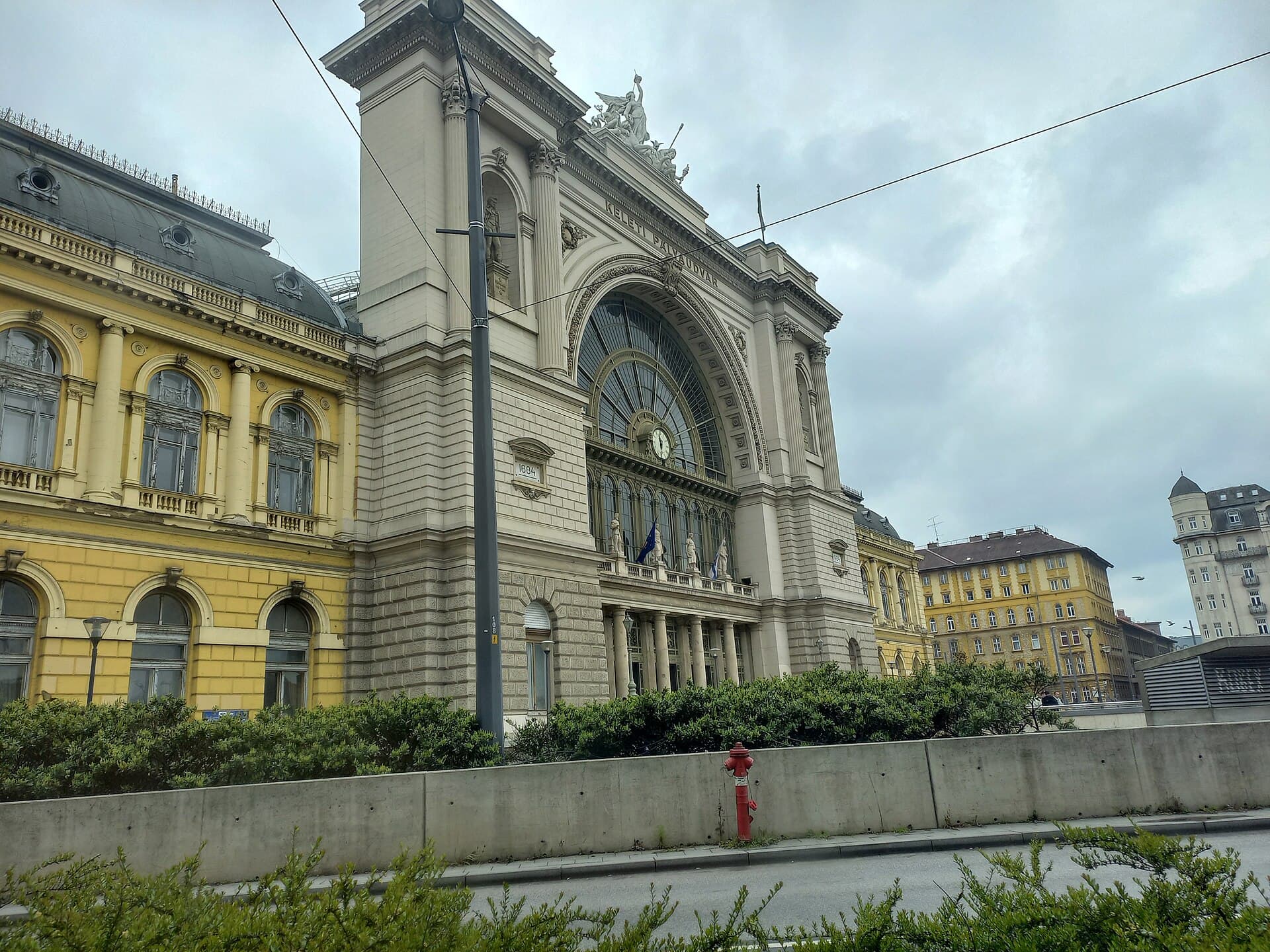
Search for how to get from Budapest to Vienna and Google hands you forum threads. Five of the top ten results are people asking each other on Facebook, Reddit, TripAdvisor and the Rick Steves board, and the rest are ticket resellers. That happens when nobody has written the answer down properly. The single most repeated question in those threads is whether you can do it by boat, and the answers contradict each other because the operator's own website contradicts itself.
- Take the train. Railjet and EuroCity services run hourly and take about 2 hours 40 minutes, city centre to city centre.
- There is no scheduled boat, and has not been for years. MAHART, the operator everyone names, sells no Vienna route at all. Its timetable stops at the Danube Bend.
- Do not assume you leave from Keleti. Rebuilding work has moved Vienna departures, and one Vienna train skips Keleti entirely.
- Book early or pay a lot more. ÖBB opens sales 180 days out and the cheap quota goes first. The cheap ticket is locked to one train and is not refundable.
- Day trips are worth buying in the other direction only. From Vienna there is a well-reviewed 12-hour tour. From Budapest the market is two thinly reviewed private cars. Take the train instead.
The four ways, compared
Vienna and Budapest are 215 kilometres apart, which in Central European terms is close enough that the mode you pick matters less than when you book it. Here is the whole picture before the detail.
| Option | Time each way | Price | Leaves from | Verdict |
|---|---|---|---|---|
| Train (Railjet, EuroCity) | About 2h40 | From about €15 booked ahead | Keleti, calling at Kelenföld | The answer for almost everyone |
| Bus (FlixBus, RegioJet) | 2h25 to 3h10 | From about €11 | Népliget (FlixBus), Kelenföld (RegioJet) | Cheaper, less central at both ends |
| Car | About 2h30 | Fuel plus both countries' motorway passes | Anywhere | Only if you are carrying on into Austria |
| Scheduled boat | Does not exist | Not applicable | Nowhere | Read the section below before planning around it |
| Private transfer | About 2h30, longer with stops | €225 to €680 per car | Your door | Only sensible with luggage, a group, or a Bratislava stop |
| Organised day tour | 10 to 13 hours | €129 to €1,390 | Hotel pickup | Good value from Vienna, poor value from Budapest |
The train, which is the answer for almost everyone
MÁV, the Hungarian state railway, puts it in one line on its international services page: Railjet and EuroCity trains run hourly between Budapest and Vienna. That is the single most useful fact about this journey, because it means you do not need to plan around a departure. Turn up within the hour and there is a train.
The scheduled run is roughly 2 hours 40 minutes. Working from the published 2026 timetable, a train leaving Vienna at 06:40 reaches Budapest Keleti at 09:19. Both ends are proper city-centre termini, which is the reason the train beats flying on this route without the comparison even being close: an hour in the air becomes four hours once you add two airports.
One caveat worth setting against that hourly claim. The Budapest to Győr to Hegyeshalom line has been a building site for much of 2026 because of the Déli körvasút project, and MÁV's own notices warn of journeys running 10 to 25 minutes longer during engineering windows. It is still the best option. It is just not always the advertised 2 hours 40.
Which station you actually leave from
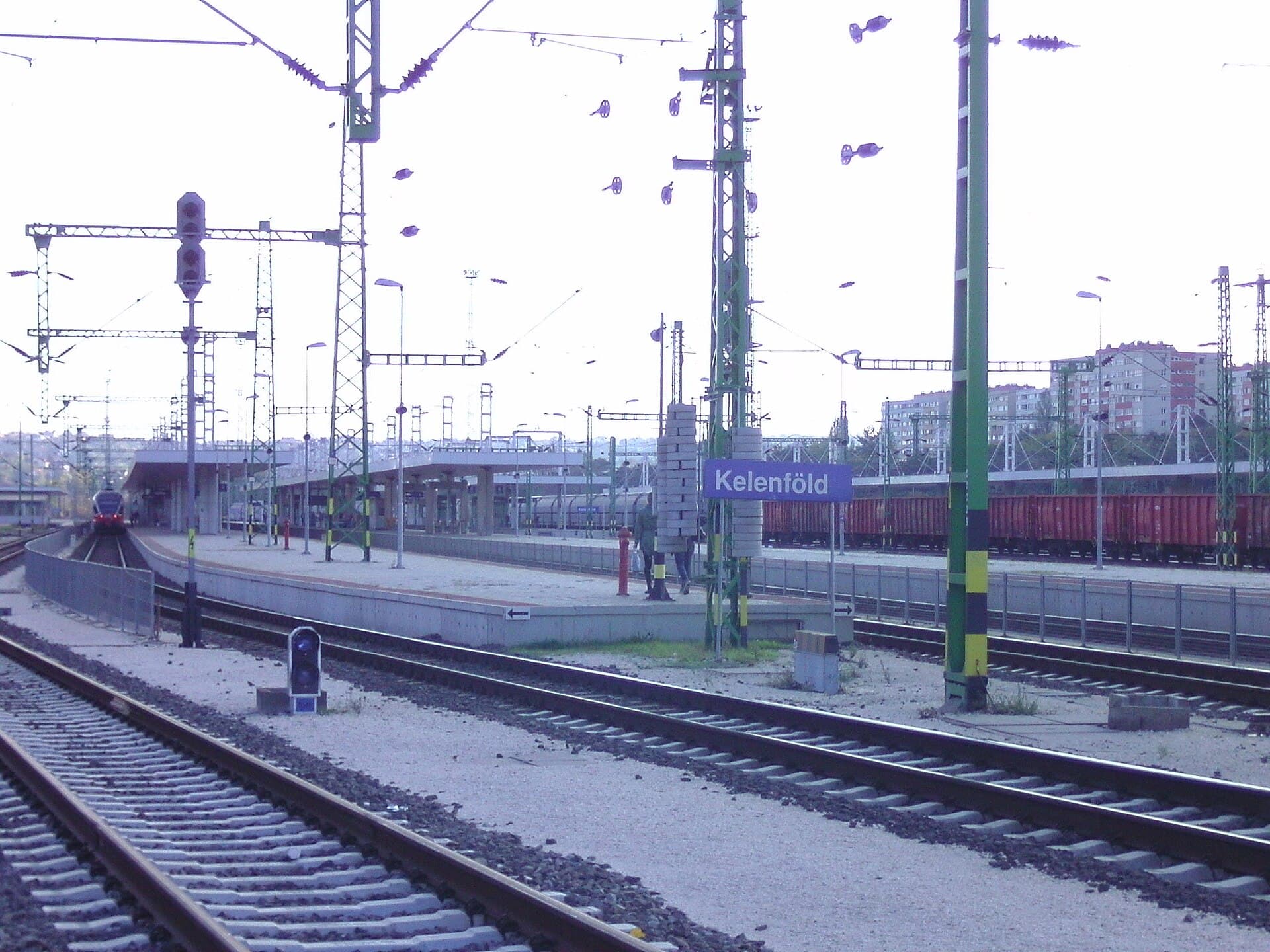
Every English-language guide to this route names one station. Most say Keleti, a few say Kelenföld, and none of them mention that the answer changes. MÁV's own engineering notices from 2026 show departures moving between the two, and the times moving with them.
| When | Departs Keleti | Departs Kelenföld | Arrives back from Vienna |
|---|---|---|---|
| Standard timetable | :40 past the hour | Roughly 15 minutes later | Keleti at :19 past |
| Summer 2026 engineering window | :30 past the hour | :50 past the hour | Kelenföld :17, Keleti :35 |
| Tisza-Szamos EuroCity (EC 143/146) | Does not call at Keleti at all | Normal call | Calls at Kőbánya felső instead |
The row that matters most is the last one. The Tisza-Szamos EuroCity links Vienna with Ukraine and Romania through Budapest, and MÁV states plainly that it runs without touching Keleti, stopping at Kőbánya felső instead. If you booked a cheap Vienna fare, got the Tisza-Szamos, and went to Keleti because a guide told you to, you would watch your train leave from a suburban station on the other side of the city.
None of this is a reason to worry, and it is certainly not a reason to avoid the train. It is a reason to do one thing: read the departure station printed on your ticket, and book through jegy.mav.hu or ÖBB rather than a third-party reseller, because the operators show the correct station for your date and the resellers frequently show the timetable as it was.
The practical difference between the two stations is real. Keleti is the grand terminus on the Pest side, on metro lines M2 and M4, ten minutes from the centre. Kelenföld is a working junction out in District XI on the Buda side, on M4 only. If your train is moved, the M4 runs between them and MÁV points passengers at exactly that. Add twenty minutes and you are fine.
How to pay the least for the train
The fare system that governs this route is ÖBB's Sparschiene, and it behaves like an airline fare rather than a railway one. Tickets go on sale 180 days ahead, there is a limited quota at each price, and once the cheap seats are gone the price climbs. Booking early is not a tip here, it is most of the saving.
| Ticket | ÖBB starting price | Seat reservation | Changes and refunds |
|---|---|---|---|
| Sparschiene Europe, 2nd class | From €4.90 | Not included | None. Tied to one train |
| Sparschiene Europe, 1st class | From €9.90 | Not included | None. Tied to one train |
| Sparschiene Komfort, 2nd class | From €9.90 | Included | Free until 15 days before, then 50% |
| Sparschiene Komfort, 1st class | From €14.90 | Included | Free until 15 days before, then 50% |
Two things worth knowing that the fare table does not say. First, a standard Sparschiene is locked to the train you picked, so if you turn up an hour early you cannot simply take the earlier service. Second, ÖBB's booking engine has a best price tick box in the connection list, and using it is the difference between seeing the cheap quota and not.
If your plans are genuinely firm, buy the cheap non-refundable fare and enjoy paying less than a taxi to the airport. If there is any chance you will move the day, the Komfort version at a few euros more buys a seat and a free cancellation, which on a trip where the weather might change your mind is usually worth it.
The boat that no longer runs
This is the part every forum thread argues about, so here is the answer with the evidence attached. There is no scheduled passenger boat between Vienna and Budapest. MAHART PassNave, the Hungarian operator that every guide names as running it, does not sell one.
We checked their own site rather than anybody else's. Their sitemap lists 159 pages and not one of them mentions Vienna. Their timetable section is fully enumerated and covers the Danube Bend only: Szentendre, Vác, Visegrád, Esztergom. Their homepage sells Budapest sightseeing cruises, a Szentendre trip, a Prosecco cruise and boat hire. A legacy page for a Bratislava hydrofoil still exists as a URL but now redirects straight to the homepage.
So why does the internet insist otherwise? Because MAHART's own website says both things. On their hydrofoil fleet page, one paragraph says you can ride the hydrofoil between Budapest and Visegrád or Esztergom, and the paragraph immediately below it says between Budapest and Vienna, Visegrád or Esztergom. An out-of-date sentence survived an edit, and a decade of travel writing has been quoting it. The same site dates the information on its own destinations page to 2021, which tells you how closely it is maintained.
What does exist is river cruising, which is a different product sold to a different person. Viking, Uniworld and others sail this stretch of the Danube as part of multi-day itineraries running into thousands of euros, with your cabin as your hotel. That is a holiday, not a way of getting to Vienna. If somebody quotes you a Danube cruise price for this journey, check whether you are being sold a week.
There is one Danube passenger boat worth knowing about on this corridor, and it is not the one you were looking for. The Twin City Liner, a high-speed catamaran, runs Vienna to Bratislava, which is a genuinely pleasant hour and a quarter and a real alternative to the train on that shorter leg. It stops at Bratislava. It does not continue to Budapest.
The usual way to ride it as a visitor is a day trip out of Vienna: coach to Bratislava, a couple of hours in the old town, catamaran back. It is the closest thing that exists to the Danube crossing people come to this page looking for, so it earns a mention. It also earns two warnings, which the listing itself supplies and most write-ups do not repeat.

Bratislava Day Trip from Vienna with Catamaran Cruise on the Danube
The only scheduled Danube boat you can realistically ride on this stretch, and we are showing you the rating rather than hiding it: 3.59 across 752 reviews is the weakest score of anything on this page, and 751 people is a large enough sample to take seriously. Two things the listing says and the reviews confirm: the catamaran leg runs in summer only, and outside it you are on a bus both ways; and the coach carries up to 45, so this is not a small group. Book it for the boat, in summer, or do not book it. Free cancellation up to 24 hours, and you need your passport for Slovakia.
If it is river time in Budapest you are after rather than transport, you can have that for a fraction of the money without leaving the city: an evening Danube cruise here runs about a quarter of the price above, with a far better rating behind it. Which format to book, why night beats day and why the operator hardly matters are in our guide to the Danube cruise in Budapest, which we have done twice.
The bus, and when it makes sense
FlixBus and RegioJet both run this corridor, and at the bottom of the price range they undercut the train: resellers advertise from around 11 to 13 euros, with journey times between 2 hours 25 and 3 hours 10 depending on the service. Those are advertised starting prices from aggregators rather than figures we could reproduce on the operators' own booking engines, so treat them as the shape of the market.
The real difference is not price or time, it is where they leave from. FlixBus uses Népliget bus station and RegioJet uses Kelenföld. Neither is bad, and both are on the metro, but neither is Keleti, and a bus that saves you four euros and costs you forty minutes of getting to it has not saved you anything.
The honest case for the bus is narrow: you are travelling at short notice, the cheap train quota is gone, and the walk-up rail fare has jumped. In that specific situation the bus is the sensible answer. Planning ahead, the train wins on comfort, on centre to centre time and, if you book early, frequently on price too.
The other road option is a private car, and it deserves a word because the search results push it hard. Most listings on this route are €540 to €680 for the car, and the ones at that price mostly carry no reviews at all, which is not evidence of anything. A car makes sense in three situations and no others: you are four people, so €300 split four ways stops being silly; you are moving with real luggage; or you want the Bratislava stop written into the journey. The better-reviewed options are all in the Vienna to Budapest direction, priced around €225 with two sightseeing stops and €299 with a Bratislava visit, on samples of 12 and 19 reviews respectively. Small samples, said plainly. Going the other way, out of Budapest, the listings we found were €670 with nothing behind them, and we are not sending you to those.
Vienna in a day from Budapest: our verdict
You can do it. Take the first departure, come back on one of the late evening services, and you get roughly nine hours in Vienna for about five hours and twenty minutes on trains. That is a real day out, and the hourly frequency means a missed train costs you an hour rather than the day.
Should you? Our answer is usually not, and the reason has nothing to do with the journey. Vienna is a city with two of the great museum collections in Europe and an imperial centre that takes a day on its own. Compressing it into nine hours produces the worst version of it: a march between the Hofburg and Stephansdom with a queue for Schönbrunn you did not have time for. Vienna is worth an overnight.
If what you want is one day out of Budapest, you get far more from staying in Hungary. Szentendre is forty minutes each way instead of five and a half hours, and the Danube Bend and Eger both give you a full day without spending most of it seated. We compare those properly, with real transport prices and entry fees, in our guide to day trips from Budapest. And if you have not yet decided how many days Budapest itself deserves, the Budapest itinerary works that out first, which is the right order to make this decision in.
One thing we will not do is sell you a tour for this. There are organised day trips from Budapest to Vienna on the market, and they are a private car at €1,390 with two reviews and another at €320 with six. Two reviews is not evidence, and neither is worth your money against a €15 train that runs every hour. Book the train.
Coming the other way: Budapest in a day from Vienna
The market for this route runs almost entirely in the opposite direction, and once you look at the inventory it makes sense: far more people base themselves in Vienna and add Budapest than the reverse. If that is you, an organised day trip is a reasonable buy, because a twelve-hour day in an unfamiliar city is exactly the situation where somebody else handling the logistics earns their margin.
| Tour | From | Rating (reviews) | Length | What the rating means |
|---|---|---|---|---|
| Budapest Small-Group Day Trip from Vienna | €169 | 4.85 (586) | 12 hours | A high score across a large sample. The strongest evidence of the three |
| Budapest Day Trip from Vienna, with Bratislava photo stop | €129 | 3.68 (726) | 13 hours | €40 cheaper and the lowest rated, across the biggest sample of all |
| From Vienna: Bratislava and Budapest guided day trip | €169 | 4.72 (145) | 12 hours | Good score, but a quarter of the sample of the leader |
That middle row is the useful one, and it is the reason we show review counts rather than stars alone. The cheapest tour is not a bargain that nobody has noticed. It is the worst rated of the three, and 726 people have said so, which is a far larger sample than the tour rated 4.72. A high score on thin evidence is worth less than a middling score on thick evidence, and both are worth less than a high score on 591 reviews.

Budapest Small-Group Day Trip from Vienna
Twelve hours door to door from Vienna, in a small group rather than a coach. We pick this one over the cheaper option purely on the numbers: 4.86 across 591 reviews against 3.68 across 726 for the tour that saves you €40. Free cancellation. Be clear-eyed about what a day trip is, though: you will see the Parliament, the castle district and the river, and you will not see the inside of a thermal bath.

From Vienna: Guided Day Trip to Bratislava and Budapest
The same twelve hours, but split across Bratislava and Budapest instead of spent on Budapest alone. Worth it only if seeing two capitals matters more to you than seeing either properly, because it halves an already compressed day. The 4.72 is a good score on a quarter of the sample behind the tour above, which is why we list it second rather than first. Free cancellation.
If you are coming for the day and want to spend it well, the two things Budapest has that Vienna does not are the thermal baths and the ruin bars, and a coach day trip realistically gives you neither. That is the strongest argument for staying the night rather than a better tour.
Where this fits in a three-city trip
Plenty of people arrive at this route while planning Prague, Vienna and Budapest together, and the geography does most of the deciding. Vienna sits in the middle of the three. Travel Prague to Vienna to Budapest, or reverse it, and every leg is a short daytime train. Try to do Prague and Budapest consecutively and you have added a long journey for nothing.
There is no combined ticket for the three, so each leg is bought separately, and each one is cheapest booked well ahead for the same quota reasons described above. Flying between any pair of them is slower once airports are counted.
How long to give each city is a question we are not going to answer, because we have not done the work on Prague and Vienna and would just be guessing at you. What we can say with data is how long Budapest itself needs and what fills those days, which is exactly what the Budapest itinerary covers. Settle that first, then fit the other two around it.
Frequently asked questions
How long does the train take from Budapest to Vienna?
About 2 hours 40 minutes on the Railjet or EuroCity. MÁV states that Railjet and EuroCity trains run hourly between the two cities. Journey times stretch by 10 to 25 minutes during engineering work on the line, which has been frequent through 2026.
Is there a boat from Vienna to Budapest?
Not as a scheduled service, and not for years. MAHART PassNave, the operator every guide names, sells no Vienna route at all: its timetable covers only the Danube Bend. The confusion comes from its own website, which still carries an out-of-date sentence mentioning Vienna on its hydrofoil fleet page. River cruise lines such as Viking do sail this stretch, but those are multi-day cruises costing thousands, not a way to travel between the two cities.
Which station do trains to Vienna leave from in Budapest?
Usually Budapest-Keleti, calling at Budapest-Kelenföld about 15 minutes later. But it is not fixed. During the Déli körvasút engineering works MÁV has moved departures and, in the case of the Tisza-Szamos EuroCity, has run Vienna trains without calling at Keleti at all. Check the station printed on your ticket rather than assuming Keleti.
Is it worth doing Vienna as a day trip from Budapest?
It is doable and it is a long day: roughly 5 hours 20 minutes on trains plus whatever you spend in Vienna. Leave on the first train and come back on a late one and you get around nine hours in the city. Our honest answer is that Vienna deserves an overnight, and that if you only have one spare day from Budapest, Szentendre or the Danube Bend gives you more for far less travelling.
Is the bus cheaper than the train?
Usually yes at the bottom end. Aggregators advertise buses from around 11 to 13 euros against roughly 15 euros and up for an advance train ticket, and walk-up train fares are much higher. The catch is where they leave from: FlixBus uses Népliget and RegioJet uses Kelenföld, neither of which is as central or as simple as Keleti.
How far in advance should I book the train?
ÖBB sells Sparschiene tickets up to 180 days ahead and prices rise as the cheap quota sells out, so early is genuinely cheaper. The trade-off is that a standard Sparschiene is tied to one specific train and cannot be refunded. If your plans might move, Sparschiene Komfort adds a seat reservation and free cancellation up to 15 days before travel.
Can I use one ticket for Prague, Vienna and Budapest?
There is no single through ticket, but the three cities sit on a straightforward rail chain and each leg is bought separately. Vienna sits in the middle, which is why most people travel Prague to Vienna to Budapest or the reverse rather than doubling back.
Do I need my passport on the train?
Hungary and Austria are both in the Schengen area, so there is no routine border check on this route. Carry photo identification anyway, since Schengen states can reintroduce temporary checks and rail staff can ask for identification alongside your ticket.
Some links on this page are affiliate links. If you book through them we earn a commission at no extra cost to you. It does not change what we recommend. Full disclosure.