Shoes on the Danube: What Happened Here, and How to Visit
Updated September 2026 · History checked against Yad Vashem, not paraphrased from other guides
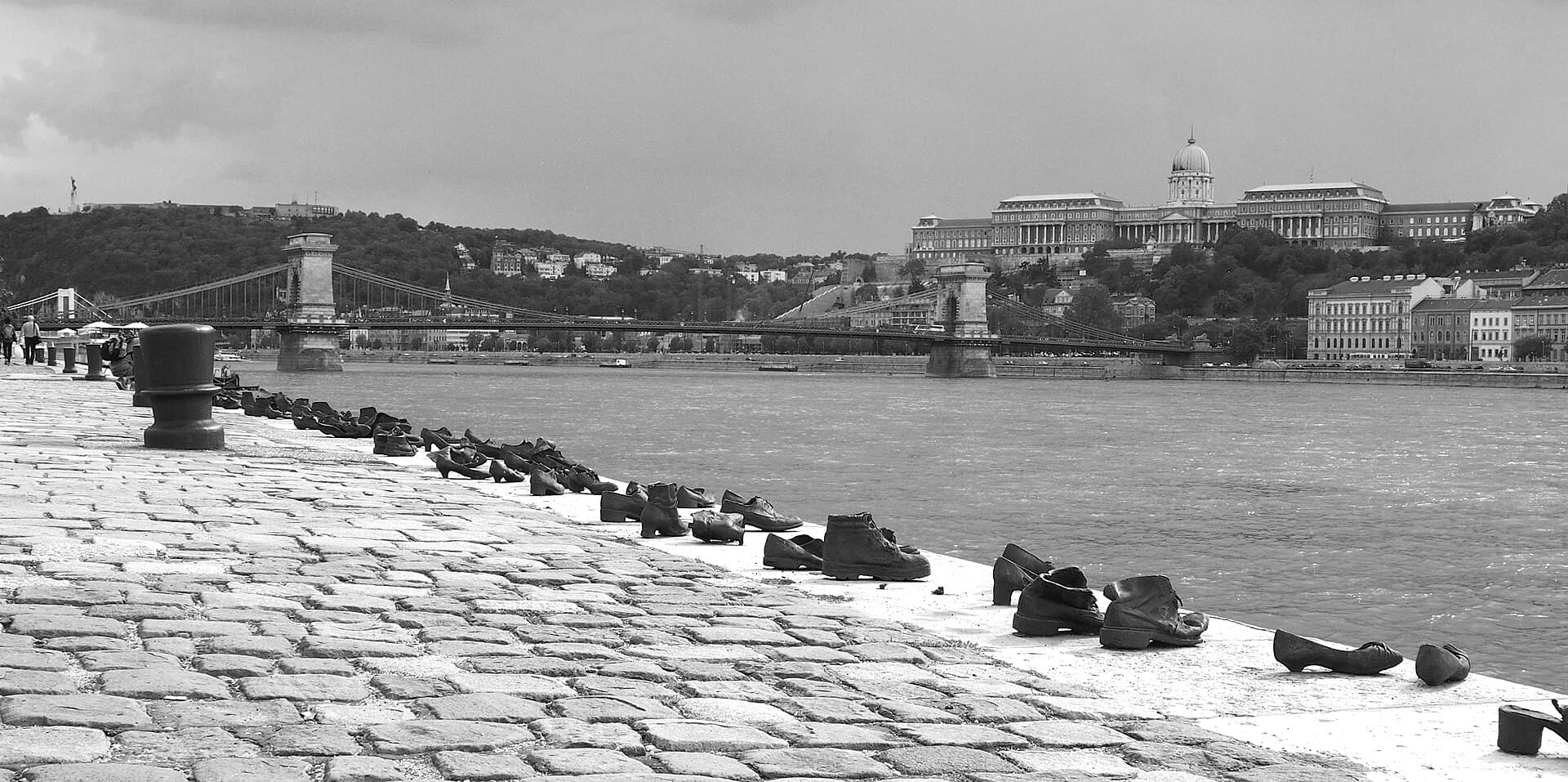
This is the one page on this site with nothing to sell on it. There are Jewish heritage walking tours in Budapest and some of them are very good, but a booking button does not belong on the same screen as this, so there is not one. If you want a guided visit, you will find those on our things to do in Budapest page.
The history below is checked against Yad Vashem, the World Holocaust Remembrance Center, which tells it better and at more length than a travel guide should attempt. What follows is the short version, the part visitors most often get wrong, and the practical detail Yad Vashem has no reason to cover.
- It was the Arrow Cross, Hungarians, not the Germans. That is the thing most visitors have wrong.
- Sixty pairs of shoes, but not sixty people. They stand for thousands.
- Free, open, unfenced, at any hour. No ticket and nothing to book.
- On the Pest embankment, about 300 metres south of the Parliament, down at river level.
- Leave a stone if you want to leave something. That is the gesture that belongs here.
It was not the Germans
In October 1944 the Germans removed the government of Miklós Horthy and installed Ferenc Szálasi and the Arrow Cross Party, a Hungarian fascist movement. What followed in Budapest that autumn and winter was carried out by Hungarians: Arrow Cross militiamen, known as the Nyilas, beating, robbing and killing Jews in the streets of their own city.
Among the ways they did it was to march people down to the edge of the Danube and shoot them there, so that the current carried the bodies away. Yad Vashem is blunt about the logic of it: shooting people into the river was convenient.
Before shooting them, the militiamen frequently ordered their victims to take off their shoes. Shoes were valuable in 1944. They could be worn or sold on the black market. That is the whole reason this memorial is made of shoes and not of names.
The memorial does not leave any of this to inference. Its own cast iron plaques, in Hungarian, English and Hebrew, say: "To the memory of the victims shot into the Danube by Arrow Cross militiamen in 1944-1945."
We are labouring the point because getting it wrong is common, and because Holocaust education organisations now treat the blurring of who did what as a form of distortion in its own right. Hungary's own role is the reason this memorial stands in Budapest rather than anywhere else.
What the sixty pairs represent
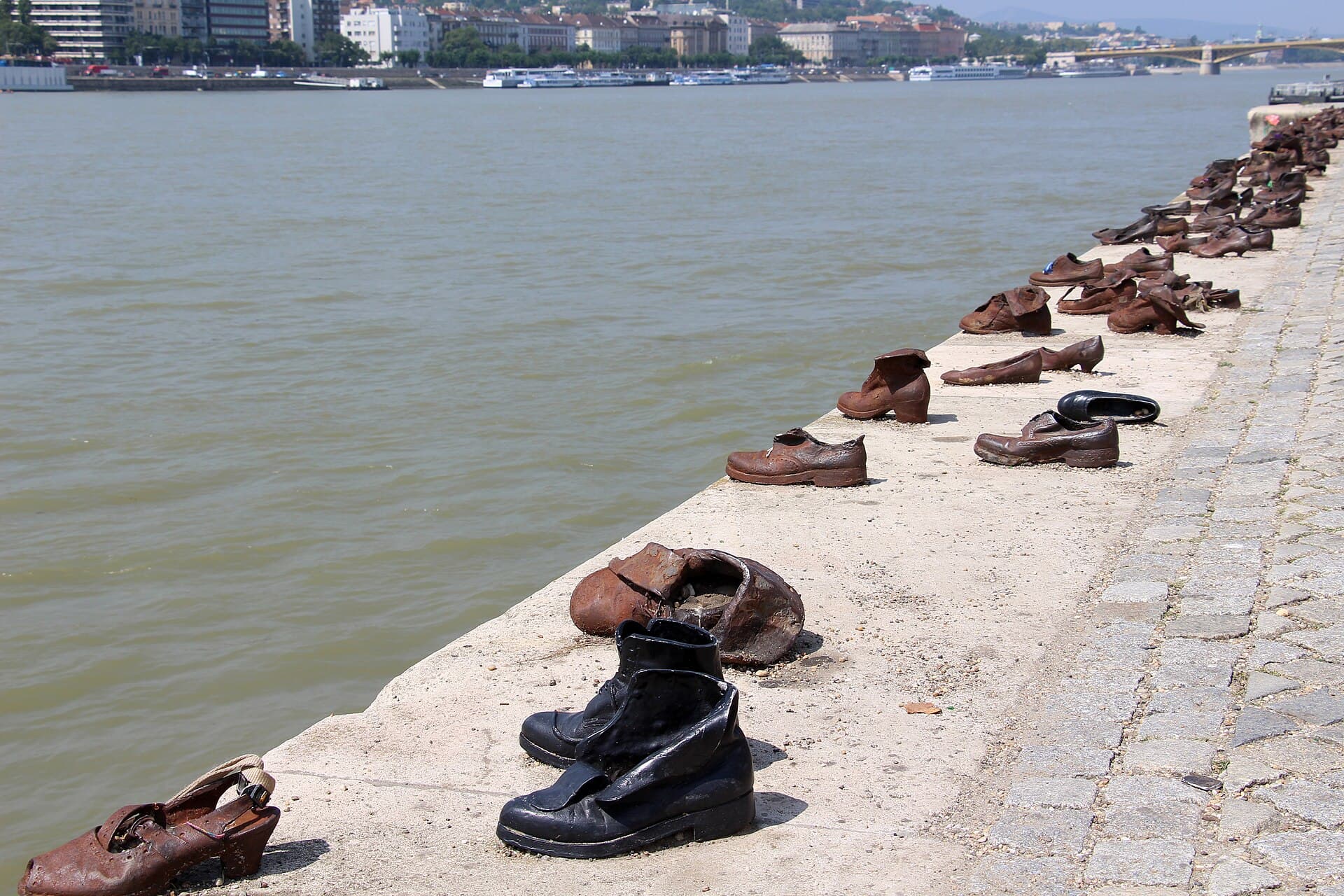
There are sixty pairs. They do not stand for sixty people. That confusion is worth clearing up before you go, because the scale is the point.
| Figure | What it refers to |
|---|---|
| 23,500 | People shot into the Danube during the Arrow Cross terror, the figure the composition commemorates |
| 20,000 | Of those, the number who were Jews |
| About 3,600 | Jews taken specifically from the Budapest ghetto and shot at the riverbank, mostly in December 1944 and January 1945 |
| 60 | Pairs of iron shoes in the memorial. A representation, not a count |
The shoes themselves are period-accurate and deliberately varied: work boots, men's oxfords, women's heeled shoes, and small children's shoes. Walking the line and noticing the children's pairs does more than any figure.
The memorial itself
It was conceived by the film director Can Togay and made with the sculptor Gyula Pauer, and it was put in place on 16 April 2005. In Hungarian it is Cipők a Duna-parton.
The physical facts, which are easy to miss when you are there:
- The shoes are iron, rusted, and fixed into the concrete at the very lip of the embankment. They are not loose and they are not bronze.
- Behind them runs a stone bench, 40 metres long and 70 centimetres high. It is part of the memorial, and it is there to be sat on.
- There are three cast iron plaques, spaced along the length, each carrying the same sentence in Hungarian, English and Hebrew. Find one and read it; a lot of visitors walk the whole memorial without noticing they exist.
Where it is, and visiting it
The memorial is on the Pest embankment, at river level on the promenade rather than up on the road, roughly 300 metres south of the Parliament. It sits between Széchenyi István tér and Kossuth Lajos tér, near the Hungarian Academy of Sciences, in line with where Zoltán utca would reach the water.
| Detail | |
|---|---|
| Cost | Free. There is no ticket and no gate |
| Opening hours | None. It is open public embankment at any hour |
| How long | Ten to fifteen minutes |
| Getting there | Tram 2 runs along this embankment and stops at both Széchenyi István tér and Kossuth Lajos tér; the memorial is between them. Metro M2 serves Kossuth Lajos tér |
| Accessibility | Flat promenade at river level, reached by steps or ramps from the road |
Most people arrive on foot from the Parliament, which is a few minutes north along the same promenade, and that is the sensible way to do it. The Budapest itinerary sets out where both fit in a day.
The stones, and the photograph question
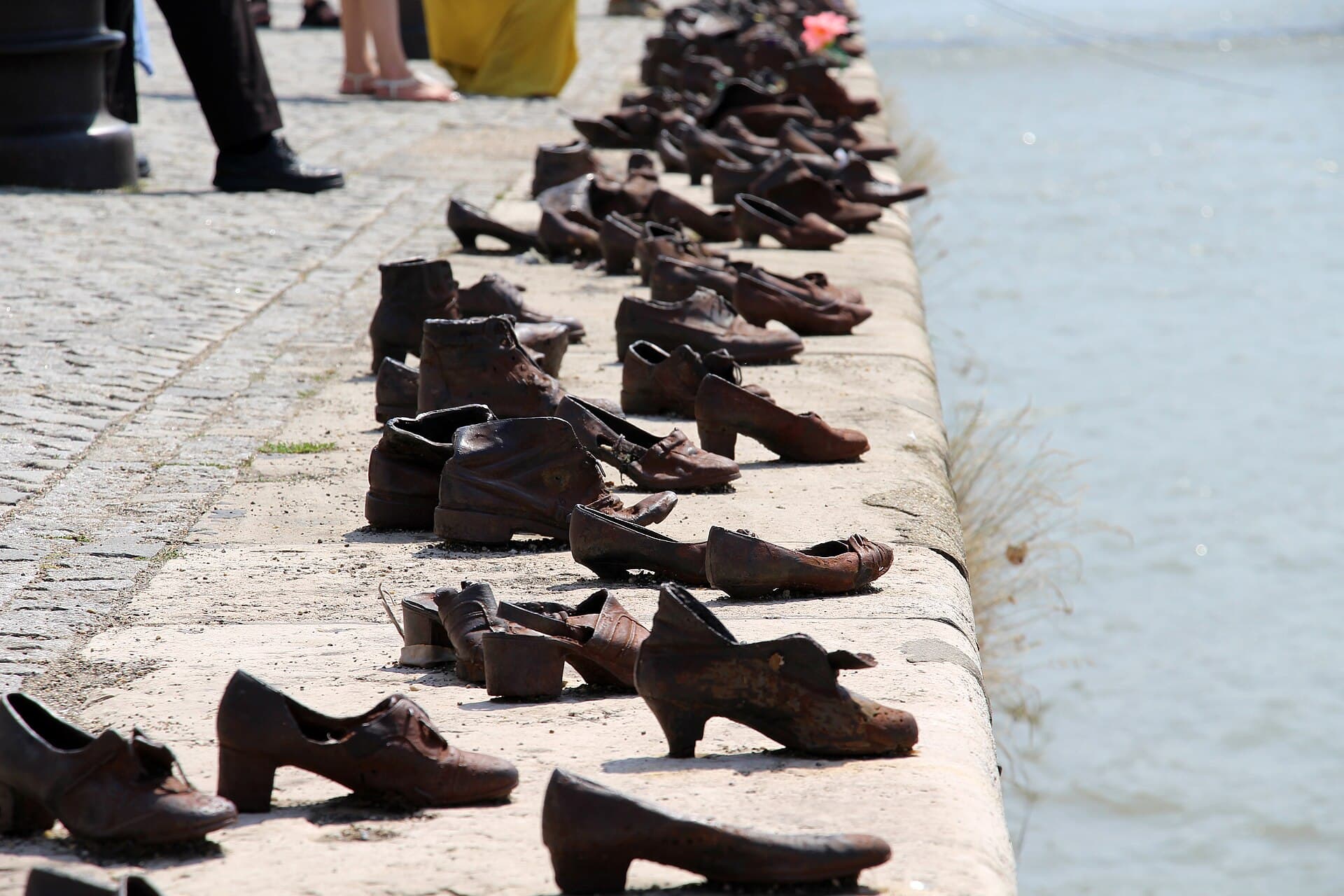
You will see small stones sitting inside some of the shoes, along with candles and flowers. Leaving a stone is a Jewish custom of remembrance, usually done at a grave, and it is the gesture that fits here. If you want to leave something, leave a stone.
Then there is the harder question, and it is worth being direct about it because it is the single most common complaint about this place. Photographing the memorial is completely normal. Nobody minds, the people who made it expected it, and a photograph is a form of attention.
What sits badly is posing: standing in the shoes, arranging yourself among them, smiling into a camera, filming a piece to camera. This happens often enough that Holocaust education organisations have written about memorial selfies as a form of distortion, which is a strong word chosen carefully. The simple test is the one you would apply at a grave, because that is effectively what this is.
One practical note that follows from the same thought: the shoes are at the very edge of the embankment and the drop into the river is immediate. Watch children closely here, for the ordinary reason as well as the obvious one.
The people who saved others
It would be an incomplete page that left you only with this. The same months produced one of the more remarkable rescue efforts of the war, and it happened in the same streets.
- Raoul Wallenberg, the Swedish diplomat, and around 250 colleagues issued protective papers and rented buildings across Budapest which he declared extraterritorially Swedish in order to shelter the people inside them.
- Valdemar and Nina Langlet, of the Swedish Red Cross in Budapest, worked to the same end.
- Giorgio Perlasca, an Italian, sheltered Jews in the Spanish embassy.
- Károly Szabó and twenty policemen broke into an Arrow Cross house on the night of 8 January 1945 and got out everyone who had been marched from a building on Vadász utca to the riverbank. Among those saved was Lars Ernster, who reached Sweden and later sat on the board of the Nobel Foundation.
Budapest was reached by Soviet forces in February 1945, which is what stopped the killing at the river.
If you want to follow this further, the Jewish Quarter in District VII is a twenty-minute walk away and holds the Great Synagogue on Dohány Street, the largest in Europe. What the ticket costs and includes, and the days the complex is shut, are in the Great Synagogue guide; the ruin bars that now fill the same streets are in the ruin bars guide.
Frequently asked questions
What does the Shoes on the Danube memorial commemorate?
People shot into the Danube by Arrow Cross militiamen in 1944 and 1945. The composition remembers 23,500 people killed this way during the Arrow Cross terror, 20,000 of them Jews. Victims were ordered to take off their shoes first, because shoes were worth money.
Was it the Nazis who did this?
No, and this is the detail most often got wrong. The killings at the river were carried out by the Arrow Cross, a Hungarian fascist party, after the Germans removed the Horthy government and installed Ferenc Szalasi. The memorial's own inscription names them: victims shot into the Danube by Arrow Cross militiamen.
Do the sixty pairs of shoes represent sixty people?
No. There are sixty pairs, but they stand for thousands. Around 3,600 Jews were taken from the Budapest ghetto and shot at the riverbank, mostly in December 1944 and January 1945, and the wider figure for those shot into the Danube is 23,500.
Where exactly is the Shoes on the Danube memorial?
On the Pest embankment, about 300 metres south of the Parliament building, between Szechenyi Istvan ter and Kossuth ter and near the Hungarian Academy of Sciences. It is at river level on the promenade, not up on the road.
Is the Shoes on the Danube memorial free to visit?
Yes. It is an open stretch of public embankment with no gates, no ticket and no opening hours. You can walk up to it at any time of day or night.
How long do you need at the memorial?
Ten or fifteen minutes is enough to walk the length of it and read the inscription. Most people combine it with the Parliament, which is a few minutes north along the same promenade.
Why do people leave stones in the shoes?
Leaving a small stone is a Jewish custom of remembrance, normally done at a grave. You will also see candles and flowers. If you want to leave something, a stone is the gesture that belongs here.
Is it appropriate to take photographs at the memorial?
Photographing the memorial is normal and nobody objects. Posing in or among the shoes, smiling for the camera or filming yourself there is a different matter, and it is common enough that Holocaust education organisations now write about it as a form of distortion.