Things to Do in Budapest: What Is Worth It, and What It Costs
Updated September 2026 · Prices checked against each operator, not copied from other guides
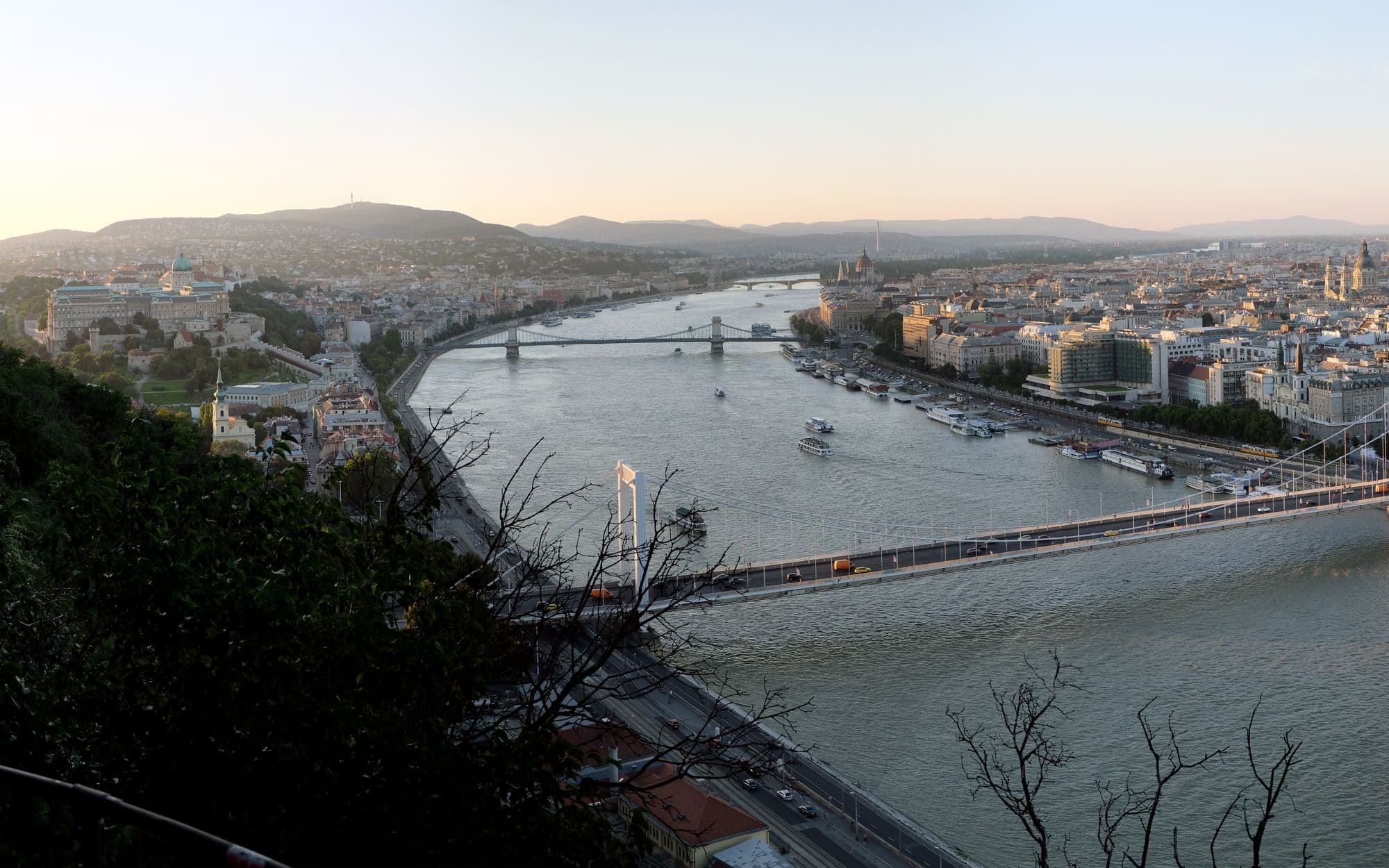
The guides ranking for this search offer 45 things, 34 things, 20 things, 15 things and 13 things. What none of them offer is a reason to skip anything. A list of everything is not much use when you have three days: what you actually need is somebody willing to say that this one is worth the money and that one is not.
- The baths are the one unmissable thing. Everything else here has a decent equivalent in Vienna or Prague.
- Budapest is unusually good for free. The best viewpoint, the most photographed terrace and the market hall all cost nothing.
- The paid interiors are where it adds up. The synagogue is 14,500 HUF, the Hospital in the Rock 30 euros if you want the tour in English, and the Parliament charges non-EEA citizens double.
- Three national holidays are free days: 15 March, 20 August and 23 October, at the Parliament and the Bastion towers alike.
- Skip the funicular at 5,500 HUF return for a fifteen-minute walk.
- The overcharging problem has a postcode. It clusters on Váci utca. Ten minutes away it mostly disappears.
- The public-boat tip in other guides is wrong. That line does not go through the centre. Details below.
Everything, with a verdict and a price
One table, sorted by whether we think it earns its place. Prices are what the operator charges, checked against their own sites in September 2026.
| What | Price | Time | Verdict |
|---|---|---|---|
| A thermal bath | from ~4,000 HUF | 3 hours | Build the trip around it |
| Fisherman's Bastion (lower) | Free | 45 min | Essential, and costs nothing |
| Gellert Hill and Citadella | Free (exhibition 4,900 HUF) | 2 hours | Essential, best view in the city |
| Parliament, from outside | Free | 30 min | Essential |
| The ruin bars | Free entry | An evening | Essential, even if you do not drink |
| Great Market Hall | Free | 1 hour | Worth it, go before 10:00 |
| New York Café | Free to look | 20 min to 1 hour | Looking costs nothing. Sitting down is about €26 for coffee and cake with service |
| Matthias Church, inside | Ticketed, see below | 45 min | Worth it |
| Opera House tour | 12,000 HUF in English | 1 hour | A seat at an actual performance costs less, from 10,700 HUF |
| House of Terror | 4,000 HUF | 2 hours | Reopens 22 September 2026, and free for a week after |
| Parliament, inside | 7,000 HUF EEA / 14,000 non-EEA | 45 min | Worth it, but book ahead. Free on 3 holidays |
| Danube cruise at dusk | from €25 | 1 hour | Touristy and genuinely good |
| Hospital in the Rock | €30 in English | 1 hour | Only if the subject grabs you. Guided tour only, and 9,500 HUF buys the Hungarian one |
| Dohany Street Synagogue | 14,500 HUF | 1 hour | The priciest ticket in town. Closed Saturdays |
| Fisherman's Bastion (upper towers) | ~1,700 HUF | 15 min | Skip. Free before 09:00, and free 24 to 31 Dec |
| Buda Castle funicular | 5,500 HUF return | 2 min | Skip unless mobility is a factor |
Worth building the trip around
A thermal bath. If you do one thing in Budapest, do this. It is the only item on the list that has no real equivalent in Vienna or Prague, it works in every season, and it is better in January than in July: sitting outdoors in 38C water while the air is near freezing is the whole point. Which one suits you is a real decision, not a coin toss, and the difference between them is bigger than the guides suggest. All eleven, compared, including the two currently closed and the age limit that now applies at four of them.
Fisherman's Bastion, early. The lower terraces never close and never charge. Arrive before 09:00 and you get the most photographed view in Budapest with almost nobody in it, and the upper towers thrown in for free because the ticket office is not open yet. This is the single most repeatable piece of advice about the city and almost nobody acts on it.
Gellert Hill. Free, open always, and the best panorama in Budapest by a clear margin: both sides of the river, all the bridges, the Parliament from above. About forty minutes up on foot from the Buda embankment. Go at night if you want it quiet, the view holds up and the crowds do not.
The ruin bars. Worth an evening even for non-drinkers, because Szimpla Kert is closer to an art installation than a bar. Go before 21:00 if you want to see the rooms rather than the crowd. Which ones are worth it, including the one that closed years ago and still appears on other lists.
The Parliament, and how the ticket really works
This is the one attraction in Budapest where buying the ticket is genuinely confusing, and where getting it wrong costs you the visit rather than just some money. Three things catch people out: you cannot walk in, the price depends on your passport, and it is free on three days a year.
You can only go in on a guided tour, about 45 minutes, covering the Grand Staircase, the Dome Hall with the Holy Crown and a session room. And the price depends on your citizenship, not where you live: 7,000 HUF for citizens of Hungary and the EEA, 14,000 for everyone else. Exactly double, and you need the document to prove which you are.
It also sells out further ahead than people expect. When we checked the official ticket system on 20 September 2026, every one of the twenty sessions listed for the following week was already gone.
The full picture has more in it than fits here: family tickets are charged at 2.29 times for non-EEA visitors rather than two, the three free open days are not what most guides say they are, and there is a photography ban on the one object everyone wants to photograph. It is all in our Hungarian Parliament guide, with the official 2026 price list.
One thing worth repeating here, though: the Visitor Centre museum is free all year, with exhibitions on the building, the National Assembly and the 1956 revolution, whether or not you buy a tour ticket.

Hungarian Parliament Audio Guided Tour
The same 45-minute audio-guided visit, booked ahead so you are not queueing at the Visitor Centre, which matters because the official system was sold out a week deep when we checked. Do the sum against your passport first: the box office charges about €38.57 for a non-EEA adult, so this is a small premium, but only €19.28 for an EEA one, which makes it more than double. Rating 4.07 across 195 reviews is decent rather than glowing, and the recurring complaint is the pace, not the building. No free cancellation and photo ID is checked at the door.

Free Walking Tour in the Buda Castle, incl. Fisherman's Bastion
Castle Hill with a guide for a token booking fee, tip-based like most free walking tours. 4.8 across 542 reviews is the strongest evidence of any Castle Hill product we found, and it pairs well with arriving at the Bastion early on your own first.
Fisherman's Bastion: what is free, and when
The most common question about Budapest, and the one every guide answers vaguely. The short version: the Bastion is mostly free, always. The lower terraces, balconies and arcades, which is where the famous view of Parliament is taken from, are open 24 hours a day, 365 days a year, at no charge. Only the upper towers are ticketed, at 1,700 HUF, and only inside set hours.
Which makes the useful advice about timing rather than money: arrive before 09:00 and you get the whole thing for nothing, coach groups included. It is also free all day from 24 to 31 December and on the three national holidays.
And it is the wrong place for sunset. It faces east across Pest, so you are looking at the light rather than into it, and it is at its busiest. Gellert Hill, free and open at all hours, sits higher and gives you both banks. Bastion at dawn, Gellert Hill at dusk.
The full seasonal table, the concessions, the fact that the Budapest Card gets you no discount at all here, and the two pages on the operator's own site that disagree about when the ticket desk shuts, are all in our Fisherman's Bastion guide.
Worth it if you have the time
The Great Market Hall. Free, 06:00 to 18:00 on weekdays and to 16:00 on Saturday. It opens on Sunday too, but do not go: of the 118 traders who publish hours, exactly one opens on a Sunday. Before 10:00 it is a working market; by midday it is queues for langos. Same building, different experience, two hours apart.
House of Terror. Reopens 22 September 2026, and the minister says the first week back is free. Two hours in the building used by both the fascist Arrow Cross and the communist secret police. It was shut for a week in September after its director was dismissed, and the exhibition reopens unchanged. Normal price after the free week: 4,000 HUF, closed Mondays, 10:00 to 18:00 with the desk shutting at 17:30, and no online tickets at all. Carry the cash anyway, because the museum's own site does not mention the free week. Full detail in our House of Terror guide.
Matthias Church. Open 09:00 to 17:00. Its audio guide runs off a QR code on the church wifi and the first three chapters are free, which is worth knowing before paying for anything else. The church and the tower are sold as separate tickets.
A Danube cruise at dusk. The most touristy thing in this guide and the one visitors rate highest, which is worth being honest about. An hour on the water past Parliament, the Chain Bridge and Castle Hill after dark.

Budapest Danube River Sightseeing Night Cruise with Drink
An hour past Parliament, the Chain Bridge and Buda Castle after dark, drink included. The 4,120 reviews are what make this one easy to recommend: it is by far the largest sample of any product on this site, so a 4.32 average is real evidence rather than a handful of happy customers.
What to book before you fly
Budapest is a walk-up city with two exceptions. Almost everything here can be decided the morning of, which is unusual for a European capital and worth knowing before you spend an evening booking things that need no booking.
| What | Book ahead? | How far out |
|---|---|---|
| Parliament interior | Yes, always | Weeks in June to August. Days otherwise |
| Szechenyi at a summer weekend | Yes | A few days, to skip the ticket queue |
| Other thermal baths | No | Walk up |
| Danube cruise | Same day is usually fine | Busier in December |
| Fisherman's Bastion, Castle Hill | No | Never ticketed in advance |
| Great Market Hall, Heroes' Square, Gellert Hill | No | Free, no tickets exist |
| Ruin bars | No | Walk-in venues, free entry |
| Christmas markets | No | Free entry, no ticket exists |
The free version of things people pay for
Budapest rewards knowing where the free version is, more than most European capitals. Four cases where the paid option is not obviously better:
- The Bastion view. Paid inside ticket hours, free outside them. Same stones, same river, no queue.
- Parliament from the water versus from the far bank. The cruise is genuinely good and we recommend it, but the postcard shot of the Parliament is taken from the Buda embankment, standing still, for nothing.
- Tram 2 instead of a sightseeing bus. It runs along the Pest side of the Danube past Parliament and the Chain Bridge for the price of a normal ticket, 500 HUF bought ahead. It is public transport that happens to have the route a tour bus would sell you.
- Metro line M1. The oldest underground line in continental Europe, running the length of Andrassy from the centre to Heroes' Square and the baths. It is a listed monument you can ride with an ordinary ticket.
Transport is cheap enough that this matters: a single ticket is 500 HUF bought in advance, 700 HUF from the driver, and a block of ten is 4,500 HUF. Full breakdown of which ticket makes sense in the itinerary guide, and the full arithmetic on whether the Budapest Card pays for itself, which depends entirely on whether your trip is museums or sights.
Where to eat, and how to spot the trap
We are not going to hand you a list of restaurants we have not eaten in, which is what most guides do here. What we can give you is the thing that actually protects you, because Budapest has a well-documented overcharging problem in a small, predictable area and it works in ways you can learn to recognise in about thirty seconds.
The geography is the single most useful fact. The problem concentrates overwhelmingly on and immediately around Váci utca, the pedestrianised shopping street in District V, and the blocks touching it. This is consistent across traveller forums, consumer warnings and local advice going back years. It is not that every place there is bad; it is that the ratio is much worse than two streets away.
The warning signs, in order of usefulness. Any one of these is a reason to keep walking:
- No prices displayed outside, or no menu at all until you sit down. This is the foundation of every version of the scam. A place confident in its pricing shows it on the street.
- A handwritten bill, or no till. If the total arrives on a piece of paper rather than a printed receipt, you have no record and no way to dispute it.
- A cash machine inside the venue. Reported repeatedly in the worst cases, and for an obvious reason.
- You cannot reach it directly from street level. Bars accessed only by a lift or a back staircase feature heavily in the complaints.
- Somebody invited you in off the street. The best-documented Budapest scam involves being approached, taken to a specific bar, and handed a bill of hundreds of euros. If a stranger picks the venue, do not go to that venue.
Two mechanics to check rather than avoid. A service charge is legal in Hungary and common, typically added to the bill rather than left to you, but it has to be stated on the menu: read the small print before ordering, and if it is not written anywhere, question it when it appears. And when the card machine offers to charge you in euros or pounds instead of forints, always choose forints. Accepting your own currency hands the exchange rate to the merchant, and it is worse than your bank's. This one costs tourists money in every city, not just this one.
The simplest defence is distance. Walking ten minutes out of the Váci utca orbit changes both the prices and the clientele. The Jewish Quarter around the ruin bars, the streets near Astoria, and the ninth district below Kálvin tér all come up repeatedly as where people eat when they are not being funnelled. And the Christmas market food pricing is the seasonal version of the same problem, with numbers attached.
If you would rather outsource the problem entirely on your first night, a food tour is the honest answer: somebody who eats here picks the places, and unlike the Christmas market tours these have large enough review counts to mean something.

Budapest Food Tour with 8+ Tastings & Local Wine
Three hours, eight-plus tastings and wine. The number that matters here is 863 reviews at 4.91: that is a large enough sample to trust, which is not true of most food experiences in this city.

Budapest Food Tour: Market to Tavern with 12+ Tasters & Wines
More tastings and seventeen dollars cheaper, on a slightly smaller but still substantial sample of 712 reviews. Runs market-to-tavern rather than restaurant-hopping, so it doubles as a walk through the Great Market Hall with someone explaining what you are looking at.
What we would skip
Every guide tells you what to add. Here is what we would cut, and why.
- The Buda Castle funicular. 4,500 HUF one way, 5,500 return, for a two-minute ride up a hill that takes fifteen minutes to walk and is not steep. It also closes on alternate Mondays for maintenance. Charming, and poor value unless stairs are a genuine problem for you, and even then there are free escalators and a lift up the hill that almost nobody mentions.
- Paying for the Bastion towers at midday. ~1,700 HUF for a view that is free two hours earlier and less crowded.
- A second thermal bath on a short trip. They are more alike than the guides imply, and the second visit always gets rushed.
- Eating at the Christmas markets. In season, the food runs several times street prices, which is the single biggest complaint about them. The actual numbers.
- Buying tickets from the driver. 700 HUF instead of 500, every single time, for no benefit.
The boat advice other guides get wrong
One tip circulates widely on the guides ranking for this search: skip the tourist cruise and ride the public transport boat along the Danube for two or three euros instead, usually naming line D14. It sounds excellent. It does not work the way it is described, and we checked with the operators rather than repeating it.
BKK's line D14 is a cross-river ferry between Districts 21 and 23, running from Csepel-Kiralyerdo to Soroksar in the southern outskirts. It is genuine public transport at public transport prices, and it goes nowhere near Parliament, the Chain Bridge or Castle Hill. Riding it expecting a panorama of central Budapest means a long trip to the suburbs.
The boat that does run through the centre is operated by BKV, not BKK, and sold as a City Centre Cruise: a hop-on hop-off daytime service looping Kossuth Lajos Square, Margaret Island, Batthyany ter, the Castle Garden Bazaar and Petofi Square. Two catches. Its ticket is valid only for a narrow afternoon window, roughly 14:15 to 17:15, so it is not an all-day pass. And it is currently not stopping at the Margaret Island pier because of low water levels, which is the same reason the Danube Bend boat service has been suspended, as covered in the day trips guide. The Danube has been running low through 2026 and it is affecting more than one operator.
We are not quoting a BKV fare, because they publish their tariffs only inside images on their own site and we could not read them reliably. Check bkv.hu before planning around it. The honest summary: there is a cheaper boat than the evening cruise, it is not the one the other guides name, it only runs in the afternoon, and part of its route is currently curtailed.
There is a second piece of boat advice worth correcting while we are here, because it sends people further wrong: the scheduled hydrofoil from Budapest up the Danube to Vienna, which guides and forum threads still describe in the present tense. It does not run, and the operator everyone names sells no Vienna route at all. We set out the evidence, and what to take instead, in Budapest to Vienna.
The boat that is worth your money is the evening sightseeing cruise, and we have taken it twice. Which format to pick, why night is not a close call and why the company you book barely matters are all in our guide to the Danube cruise, with our own footage from the boat.
Fitting it into your days
This page is about what deserves your money. The other half of the question, in what order to do it and how many days you need, is a different problem with a different answer: hour-by-hour plans for one to five days, with the transport fares and the Budapest Card maths worked out.
If you have four days or more, one of them is better spent outside the city than adding a fifth museum: the day trips compared, with real fares and journey times. And if you are coming between mid-November and early January, the Christmas markets add an evening, though not the meal.
Frequently asked questions
What is the number one thing to do in Budapest?
Spend an evening in a thermal bath. It is the one thing Budapest does that almost no other European capital does at all, it works in every season, and it is better in winter than in summer. Everything else on a typical list, the castle, the parliament, the market hall, has a good equivalent in Vienna or Prague. The baths do not.
What can you do in Budapest for free?
More than most cities. Fisherman's Bastion lower terraces are open around the clock at no cost, and even the upper towers are free outside ticketing hours. Gellert Hill and the Citadella, the best panorama in the city, still cost nothing to walk up, even after the fortress reopened in 2026 with a paid exhibition inside it. So do Heroes' Square, the Shoes on the Danube memorial, walking the Chain Bridge, and the Great Market Hall. A day built only on free sights in Budapest is a genuinely good day.
How much does it cost to see Budapest?
Less than you would expect if you choose well, more than you would expect if you do not. The big free sights cost nothing, transport is about 500 HUF a ride, and a thermal bath is the main real expense. Where it adds up fast is the paid interiors: the Dohany Street Synagogue is 14,500 HUF and the Hospital in the Rock is 30 euros for the English-language tour, so two of those plus a bath is most of a day's budget.
Is the Budapest Card worth it for sightseeing?
Usually not. The 72-hour card is 29,990 HUF against 5,750 HUF for the equivalent transport travelcard, and it does not include Szechenyi at all, only a discount. It pays off if you are a museum person who will also use the included Danube cruise and Lukacs bath. For the trip most people actually take, it does not.
Can you see Budapest in one day?
You can see one side of the river properly in one day, not both. Castle Hill in the morning and the Pest riverfront in the afternoon is the realistic version. Trying to add a thermal bath and the Jewish Quarter to the same day means rushing all four.
What is overrated in Budapest?
Nothing is a scam, but three things are commonly oversold: the funicular, which costs 5,500 HUF return for a hill you can walk in fifteen minutes; the Christmas market food, which is several times street prices; and paying for the upper towers at Fisherman's Bastion in the middle of the day, when the same view is free two hours earlier.
Do you need to book attractions in advance in Budapest?
Only two really warrant it: the Parliament interior tour, which sells out further ahead than people expect, and Szechenyi on summer weekends. Everything else on this page is walk-up, including Castle Hill, the market hall and the ruin bars.
Why is the Hungarian Parliament more expensive for some visitors?
Because the ticket price is set by citizenship, not residence. From January 2026 an adult from the European Economic Area pays 7,000 HUF and an adult from outside it pays 14,000 HUF, exactly double. Students aged 6 to 24 pay 3,500 and 7,000 respectively, and under-sixes are free either way. You need valid ID to claim the EEA rate.
Is Fisherman's Bastion free?
Mostly, yes. The lower terraces and balconies, where the famous view of Parliament is taken from, are open 24 hours a day all year at no charge. Only the upper towers are ticketed, at around 1,700 HUF, and only between 09:00 and 19:00, or 21:00 from June to September. Outside those hours the upper towers are free too, and they are free all day from 24 to 31 December and on three national holidays.
Are there free days at Budapest attractions?
Three: 15 March, 20 August and 23 October, the Hungarian national holidays. The Parliament opens to the public without a ticket and Fisherman's Bastion drops its tower charge. The Bastion towers are also free from 24 to 31 December. Note that many museums close on those same holidays, so check the specific place before building a day around it.
How do you avoid tourist traps in Budapest?
Learn the signs rather than the addresses. Avoid anywhere that does not display prices outside, gives you a handwritten bill instead of a printed receipt, has its own cash machine inside, cannot be entered directly from street level, or that a stranger in the street steered you towards. The problem clusters heavily on and around Váci utca in District V and thins out sharply ten minutes away. Also always pay in forints, never in your own currency, when the card machine offers you the choice.
Some links on this page are affiliate links. If you book through them we earn a commission at no extra cost to you. It does not change what we recommend. Full disclosure.