Hungarian Parliament Tickets: Why Non-EU Visitors Pay Double, and 2.29x as a Family
Updated 20 September 2026 · Official prices read from the Parliament's own conditions document, because its website blocks visitors
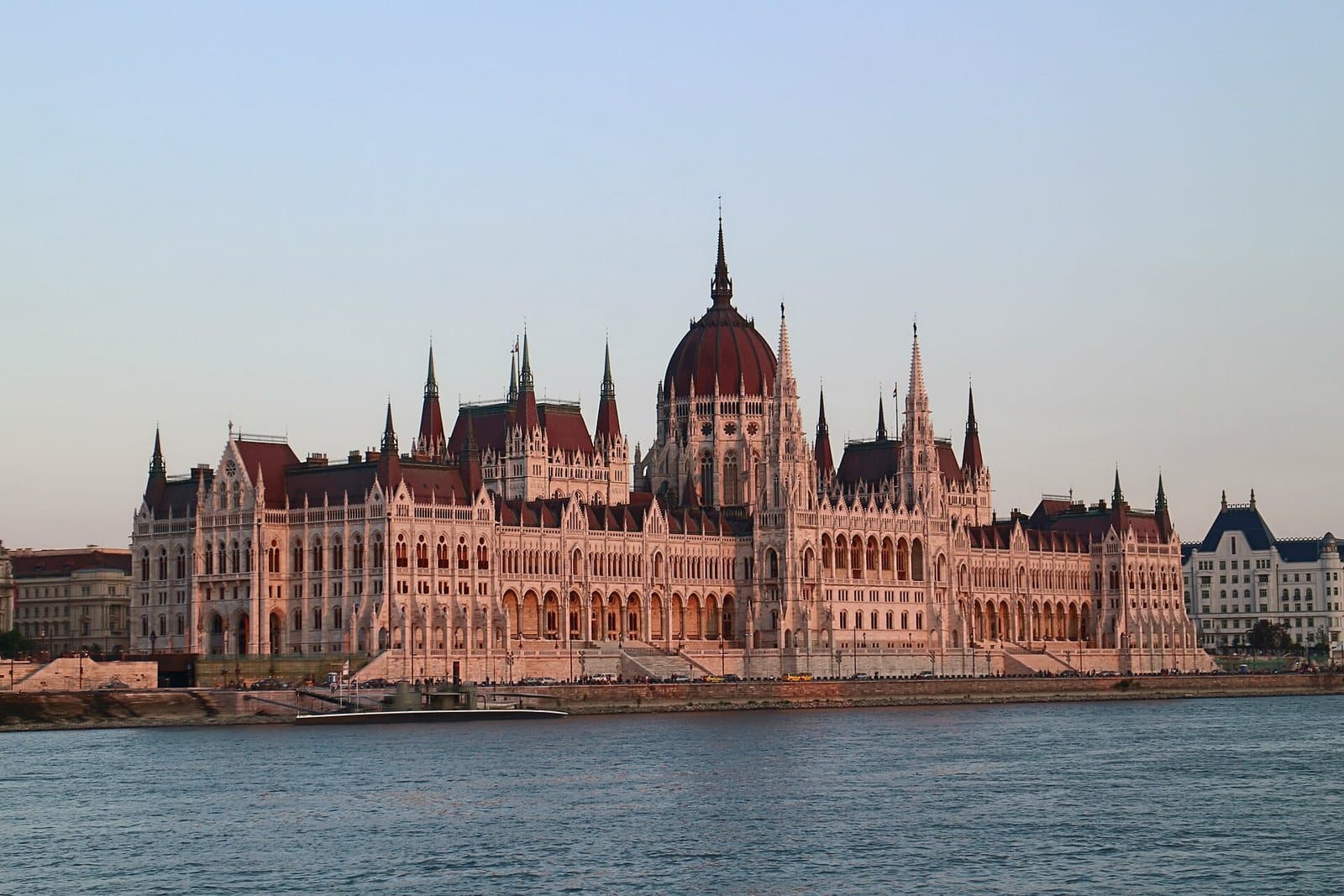
Most guides will tell you the Budapest Parliament costs 7,000 forint and leave it there. That figure is right for about a third of the people reading this, and if you hold a British, American, Australian or Canadian passport you pay exactly double. If you are a family, you pay more than double.
This page is the arithmetic, and how to get round some of it.
- 7,000 HUF for EEA citizens, 14,000 for everyone else. Exactly twice, and you must prove which you are with a document.
- Family tickets are 2.29 times, not 2. A non-EEA family of four pays 33,600 against an EEA family's 14,700.
- The family rate is a genuine saving, unusually: 30 percent for EEA, 20 percent for non-EEA.
- Three free open days a year, but the normal tours do not run on them.
- It sells out. Every session in the week we checked was gone.
The 2026 prices, and where we got them
A note on sourcing first, because it explains why other guides disagree with each other. The Parliament's own website, parlament.hu, serves a CAPTCHA to anyone it does not like the look of, and it did so to us on every attempt, including on its visitor-centre subdomain. So most guides copy each other, and the older figures stay in circulation.
The full official list does exist in public. It is in a two-page PDF called A látogatás feltételei, the conditions of the visit, sitting on the ticket seller's server, headed with the line that these are the prices from 1 January 2026. Here it is.
| Ticket | Hungary and EEA | Everyone else | Ratio |
|---|---|---|---|
| Adult | 7,000 HUF (€19.28) | 14,000 HUF (€38.57) | ×2.00 |
| Student, 6 to 24 | 3,500 HUF (€9.64) | 7,000 HUF (€19.28) | ×2.00 |
| Under 6 | Free | Free | Free |
| Family, per adult | 4,900 HUF (€13.50) | 11,200 HUF (€30.86) | ×2.29 |
| Family, per child 6 to 14 | 2,450 HUF (€6.75) | 5,600 HUF (€15.43) | ×2.29 |
The double price, and who it actually hits
Two-tier pricing for locals and foreigners exists in plenty of countries. What is unusual here is that the line is drawn at the edge of the European Economic Area, so it splits groups of Western tourists who assume they are in the same category.
The people it catches hardest are British. Before Brexit a UK passport put you in the 7,000 forint tier; now it does not. You can watch this land on people in real time: a Budapest travel group on Facebook carries a post asking "is it really double the price for a UK citizen than a EU one? Seeing 7000 HUF for EU and 14000 for UK!", with twenty-odd replies confirming that yes, it is.
There is an irony in this that is worth a paragraph, because it is true rather than clever. Imre Steindl won the competition to build this parliament partly because his neo-Gothic design resembled the Palace of Westminster. Hungarian reformers of the nineteenth century took Britain as their political model and wanted a building that said so. A hundred and twenty years later, a British visitor pays twice what a French one does to walk through it.
Practically, three things follow. Bring the document that proves your tier, because the conditions say entitlement must be evidenced and an EEA residence permit counts as well as a passport. Do not assume a reseller is cheaper. And if you are travelling as a family, read the next section, because it is where the real money is.
The family ticket, which is worth having
We have now found two Budapest attractions where the family ticket quietly costs more than buying separately, at St Stephen's Basilica and at Vajdahunyad Castle in City Park. So it is worth saying plainly that this one is not like that. Here the family ticket is a large, real discount.
| Two adults, two children 6 to 14 | Bought separately | Family ticket | You save |
|---|---|---|---|
| EEA family | 21,000 HUF (€57.85) | 14,700 HUF (€40.50) | 6,300 HUF, 30% |
| Non-EEA family | 42,000 HUF (€115.71) | 33,600 HUF (€92.57) | 8,400 HUF, 20% |
The catch, and it is a real one. Children under 6 go free, which sounds like good news until you read the small print: because the under-6 has no ticket, you cannot buy the family ticket through the website and have to request it by email from the Parliament's tourism office instead. A family with a four-year-old and an eight-year-old who does not know this will buy two adult tickets and a student ticket at the counter and overpay by 5,250 forint if they are EEA, or 7,000 if they are not.
One more, for large families: holders of a valid Hungarian large-family association card can buy three additional child tickets on the same family ticket.
The three free days, and the catch nobody mentions
On three national holidays, 15 March, 20 August and 23 October, the Parliament opens its doors for free with no booking required. Guides repeat this constantly, including, until today, ours.
What almost none of them say is that the normal tours are cancelled. Those days are an open day, not a free version of the paid visit. The Parliament's own notice for 15 March 2026 gives a window of 15:00 to 18:00, and several ticketing sites list those dates flatly as "closed for tours". What you get is a shorter route through the building, free and without registration, with queues to match. The Holy Crown has been viewable on these days.
So it is a genuine way to get in for nothing, especially for a non-EEA family looking at a 33,600 forint bill. It is not a way to get the 45-minute guided tour for nothing, and turning up at ten in the morning will not work.
For 23 October 2026 nothing has been announced yet. It has been an open day in previous years, including 2025, but the Parliament had not published this year's arrangements when we checked, so treat it as likely rather than certain and look at parlament.hu closer to the date. Two reasons it may be busier than usual: 2026 is the seventieth anniversary of the 1956 revolution, and it was from the balcony facing Kossuth Square that the Hungarian Republic was declared on 23 October 1989.
We checked whether it sells out. It does
"Book in advance" is the emptiest sentence in travel writing, so here is a measurement instead of advice.
On Sunday 20 September 2026 we opened the official ticket system, jegymester.hu, which is where the Parliament's own site sends you, and counted what it was offering. Of the twenty sessions listed for the following week, 20 to 26 September, eighteen were marked sold out and the other two unavailable. Nothing at all was bookable across seven days. That is late September in a week with no holiday in it.
Two honest limits on that finding. The listing does not label sessions by language, and the English version of the page would not load for us, so we cannot tell you whether English tours are listed separately. And it is a single snapshot on one morning, not a study. Take it as evidence that the thing genuinely sells out, not as a claim about your dates.
Two other things the ticket system tells you that the guides do not. Sessions run from about 08:15 to 17:45, including some early audio-guide slots before the first guided tour. And the Parliament can cancel your visit right up to the moment you would have walked in, because of parliamentary business or state protocol events. That is in the conditions document, and the ticket page was carrying exactly such a notice when we looked: visits suspended from 10:30 on 21 September for an official event. If that happens to you, you do get your money back. If you are merely late, you do not.
So should you use a reseller? Do this sum first
If the box office has nothing on your dates, the resale market is the only way in, and it is worth being clear-eyed rather than sniffy about it. The question is simply whether the premium is worth the certainty, and the answer flips depending on your passport, exactly like everything else on this page.
The main listing is an audio-guided entry for the same 45-minute visit, from 39.90 euros. Against the box office:
- If you are non-EEA, the box office charges you 38.57 euros, so the premium starts at 1.33 euros, about 3 percent. For a guaranteed slot in a week that was otherwise sold out, that is close to nothing.
- If you are an EEA citizen, the box office charges you 19.28 euros, and you would be paying more than double for the same 45 minutes. Try harder to get an official ticket first.
Two things to check before you book. The 39.90 is a from-price and the listing sells separate EU and non-EU options, mirroring the official tiers, so read the total at checkout rather than the headline. And it is non-refundable, where a box-office ticket is refunded if the Parliament cancels for a state event.
Worth noting as confirmation of everything above: the reseller's own product page splits its tickets into "EU Citizens" and "NON EU Citizens", and spells out that the EU tier means "European Union citizens (excluding the UK), as well as Switzerland and Norway". Even the people selling it have to explain the Brexit line to their customers.

Hungarian Parliament Audio Guided Tour
The same 45-minute visit with an audio guide in 22 languages, in groups capped at 15, booked in seconds instead of through a site that answers most requests with a CAPTCHA. If you are American, Australian or British, this matters more than the price does: your official ticket is 14,000 forint, about 38.57 euros, so the from-price here lands within a few per cent of the box office. Two things to know before you click. The listing sells separate EU and non-EU options, so check the total at checkout rather than trusting the headline figure. And it is non-refundable, while the official ticket is refunded if the Parliament cancels for a state event, which it can do right up to entry. If you hold an EEA passport your box-office ticket is half that, 7,000 forint, about 19.28 euros, and buying direct is clearly worth the effort.
The rules nobody reads, including some strange ones
The conditions document runs to two pages and contains a number of things worth knowing before you are standing at a security desk.
- Photography is allowed inside, except in two places: the security screening area, and the dome hall, where it is banned to protect the Holy Crown. The most famous object in the building is the one thing you cannot photograph.
- Security screening, and no large bags. You may bring in a plastic bottle of up to half a litre of colourless soft drink, plus liquid medicine and special foods such as baby food and formula.
- Kossuth Square is closed to traffic. You reach it on foot, and there is no parking at the Visitor Centre. Toilets are in the Visitor Centre's external public washroom.
- Under-14s must be with an adult.
- You can change your slot up to three hours before, through the ticket system, for a fee. If you simply cancel, there is no refund.
- There is a dress and conduct code. No flags or demonstration materials, no eating, drinking or smoking, and no sitting or lying on the stairs, floors or furniture, which in a building this photogenic is presumably a live issue.
- And the strangest one. Anyone who has had medical treatment with radioactive isotopes must carry a discharge report from the hospital stating the substance, the dose and the date, or the Parliamentary Guard may refuse entry. The building has radiation detectors, and this is what happens when they go off.
On accessibility: the building is accessible, and wheelchair users and visitors with assistance dogs are asked to email ahead so entry goes smoothly. An information booklet for deaf and hard-of-hearing visitors is available in Hungarian and English, on request at the desk.
What you are actually paying to see
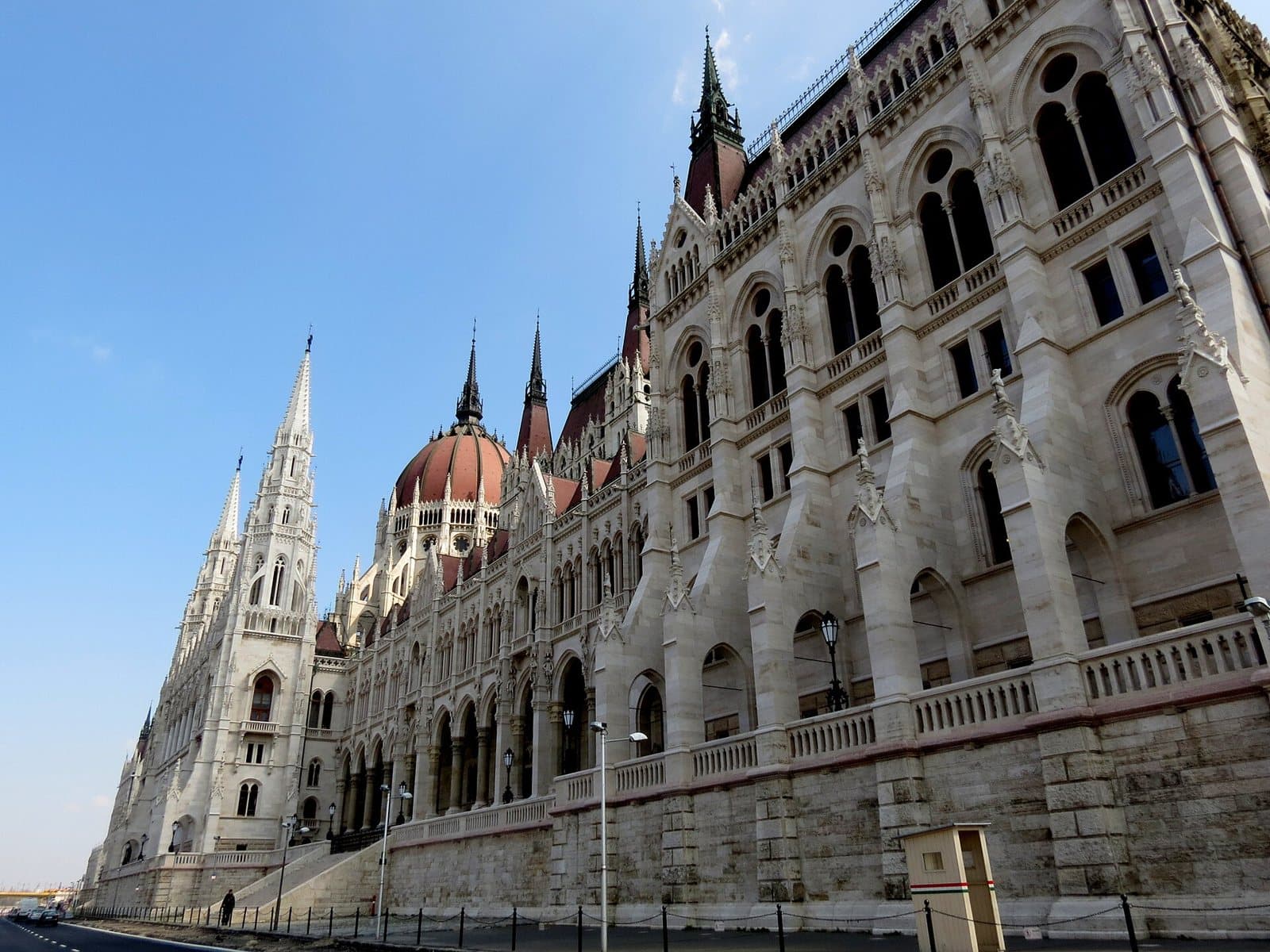
Országház means House of the Country, and at 268 metres long and 96 metres high it has been the largest building in Hungary since it was finished. That 96 metres is not an accident: it matches the year 896, when the Magyars arrived in the Carpathian Basin. St Stephen's Basilica is exactly the same height for the same reason, and no Budapest building was allowed to exceed them until 2021.
Construction started in 1885 to Imre Steindl's design, the keys were handed over in 1902, and it was not truly finished until 1904. The numbers are the sort a guide will recite at you: 691 rooms, 10 courtyards, 29 staircases, 27 gates, 242 sculptures on the walls, forty million bricks and forty kilograms of gold.
What you see on the tour is the ceremonial half. The modern National Assembly is unicameral and sits in one of the two identical debating chambers; the other is kept for ceremonies and conferences, and that is the one visitors are walked through. The route takes in the grand staircase, the frescoes and the sixteen-sided central hall, where the Holy Crown of Hungary has been displayed since 2000.
One detail the tour tends not to dwell on: a red star stood on top of the dome through the communist decades and came down in 1990. The building has been rearranged by every government that has held it, which is a pattern you can also read in the statues at Heroes' Square and in the argument about the House of Terror this month.
Where to buy: jegymester.hu, which the Parliament names as its official seller, or the Visitor Centre desk, which takes cash or card in forints. Online is card only. Resellers are easy to find at the top of Google and are not doing you a favour: one of them advertises the tour from 25 euros for an EU adult against a box office price of 19.28, and an aggregator was quoting 49.37 dollars while we were writing this.
If you would rather see it from outside for nothing, the classic view is from the Buda embankment or from the water, and our Danube cruise guide covers what that costs. Things to do in Budapest ranks it against the city's other paid interiors.
Getting there, with the actual numbers
Kossuth Lajos ter is closed to traffic and reachable on foot only, and the visitor centre has no parking, so this is a public transport journey whether you planned one or not. The good news is that it is a short one, and the figures below come from BKK's own timetable data rather than from anyone's estimate.
| How | Get off at | From | Journey |
|---|---|---|---|
| Metro M2, the red line | Kossuth Lajos ter | Deak Ferenc ter, where M1, M2 and M3 all meet | 2 minutes |
| Metro M2, the red line | Kossuth Lajos ter | Batthyany ter, on the Buda side | 1.5 minutes |
| Tram 2, along the river | Orszaghaz, latogatokozpont | Vigado ter, in the centre | 6 minutes |
| Tram 2, along the river | Orszaghaz, latogatokozpont | Fovam ter, by the Great Market Hall | 9 minutes |
Take the tram if you have six minutes to spare. The 2 runs along the Pest embankment with the castle on the other bank, it is on most lists of the best tram rides in Europe for that reason, and it stops twice alongside the Parliament, both about 200 metres away. The second of the two is called Orszaghaz, latogatokozpont, the operator naming a stop after the Parliament visitor centre, which is the one to stay on for. It runs every 4 minutes at rush hour and every 10 in the middle of the day.
The metro is the faster option and barely registers as a journey: two minutes from Deak Ferenc ter, with a train every 2.6 minutes at peak and every 5 minutes by nine in the evening. Kossuth Lajos ter station comes out on the square itself.
Frequently asked questions
How much are Hungarian Parliament tickets?
From 1 January 2026, 7,000 forint for citizens of Hungary and the EEA and 14,000 forint for everyone else, which is exactly double. Students aged 6 to 24 pay 3,500 and 7,000 respectively. Children under 6 go free. You have to prove your entitlement to the lower price with a document.
Why do non-EU visitors pay double at the Hungarian Parliament?
The Parliament operates a two-tier price for citizens of Hungary and the European Economic Area against everyone else. It is not a discount you can apply for: it is set by citizenship, with an EEA residence permit also accepted. British visitors have paid the higher tier since Brexit, which catches many of them out.
Is the family ticket worth it at the Hungarian Parliament?
Yes, and unusually so. A family of two adults and two children aged 6 to 14 pays 14,700 forint on the EEA family rate against 21,000 buying separately, a saving of 30 percent. Non-EEA families save 20 percent, paying 33,600 against 42,000. Note that if one of your children is under 6 you cannot buy the family ticket online and have to request it by email.
Can you visit the Hungarian Parliament for free?
On three national holidays, 15 March, 20 August and 23 October, there is an open day with free admission and no booking. But the regular guided tours do not run on those days: it is a shorter route in a limited window, which for 15 March 2026 was 15:00 to 18:00. Turning up at 10:00 expecting the normal tour will not work.
Do Hungarian Parliament tickets sell out?
They can, and well ahead. We checked the official ticket system on Sunday 20 September 2026 and every one of the twenty sessions it listed for the following week, 20 to 26 September, was already sold out or unavailable. That is late September, not high summer.
Where do you buy Hungarian Parliament tickets?
From jegymester.hu, which is the official ticket system the Parliament itself points to, or at the Visitor Centre desk. Resellers list the same tour for more: one of the top results in Google advertises from 25 euros for an EU adult against a box office price of about 19.28 euros.
Can you take photographs inside the Hungarian Parliament?
Yes, cameras and video are allowed in the building, with two exceptions: the security screening area, and the dome hall, where photography is banned to protect the Holy Crown. So the single most famous object inside is the one thing you cannot photograph.
How long is the Hungarian Parliament tour?
About 45 minutes. Entry is by guided tour only, there is security screening on the way in, and if you are late the visit may be forfeited with no refund or exchange.
Some links on this page are affiliate links. If you book through them we earn a commission at no extra cost to you. It does not change what we recommend. Full disclosure.