Hospital in the Rock: Guided Tours Only, No Photographs, and an English-Language Premium
Updated September 2026 · Every price and rule below read from the museum today
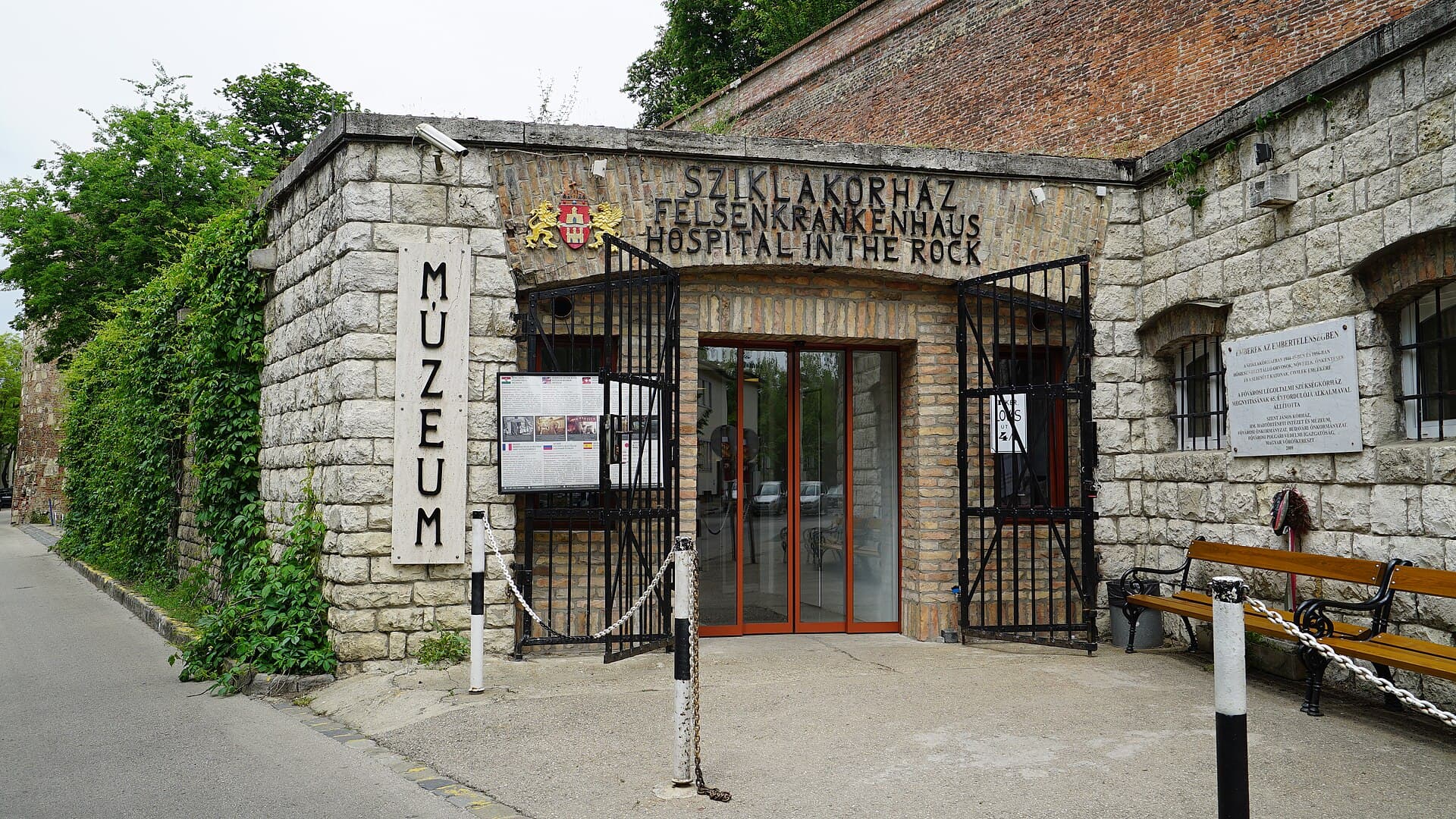
Most of what is written about the Hospital in the Rock is history, and the history is genuinely remarkable. What is much harder to find is the part you need before you go: that you cannot simply turn up and wander in, that you will not be allowed to take a single photograph, and that the price you have probably read is not the price you will pay.
- Entry is by guided tour only, 60 minutes, included in the ticket. There is no self-guided option.
- The English tour is 30 euros. The Hungarian tour is 9,500 HUF, or about 26. Same tour, roughly 15 percent apart.
- No photographs, video or audio. They do not sell photo permits either.
- Under 6s are not allowed in at all, and under 12s are not recommended.
- Last tour leaves at 18:00, though the museum says it closes at 19:00.
A hospital, then a bunker, then a secret
Castle Hill is hollow. Under the palace and the old town runs a natural cave system, widened over centuries, and in the run-up to the Second World War part of it was fitted out as an emergency hospital safe from air raids. It treated the wounded through the siege of Budapest in 1944 and 1945, and was pressed into service again during the 1956 revolution.
Afterwards it was extended into a nuclear bunker, and then it disappeared: the site stayed an official secret for decades before opening to the public in the late 2000s. By 2019 the museum counted its millionth visitor.
It is run by a foundation set up in 2015 which states that it operates without state support, from its own revenue and donations, and independently of parties, ideologies and churches. That is unusual enough among Budapest's museums to be worth knowing, and it also explains a ticket price well above the state-run museums on the same hill.
You cannot just walk in
This is the single most important practical fact and the one most guides bury. The museum can only be visited as part of a guided tour. The tour is included in the admission price, lasts 60 minutes, and covers the whole exhibition.
What that means for your day:
- You are tied to a departure time, not to opening hours. Tours run in English and in Hungarian at separate times, listed in the museum's booking calendar.
- Groups are capped at 25 people, and parties of more than 14 have to register in advance.
- Capacity is genuinely limited. The museum says only the remaining places are sold on site. When we looked at eight in the morning on a Thursday in September, the 10:00 tour in English had four places left, while the Hungarian tour at the same hour had all 25. That is one snapshot rather than a pattern, but it points the same way as their warning.
- The last tour leaves at 18:00, an hour before the stated 19:00 closing time, and the ticket office shuts at 18:00 too. Arriving at half past six because the website says 19:00 will not work.
Audio guide units are handed out free during the tours in nine languages: English, German, Italian, French, Russian, Spanish, Hungarian, Chinese and Japanese.
What it costs, and the English premium
Here is the table, straight from the museum's own price list. Read the two columns against each other, because they are the finding.
| Ticket | Tour in English | Tour in Hungarian | English costs |
|---|---|---|---|
| Adult, 18 to 65 | €30 | 9,500 HUF (about €26) | 15.2% more |
| Senior 65+, or student 19 to 26 with ISIC | €22 | 7,000 HUF (about €19) | 14.6% more |
| Child, 6 to 18 | €15 | 4,800 HUF (about €13) | 14.0% more |
| Over 70 EU citizens, EU teachers, disabled plus one companion | €0.01 | 1.27 HUF | Effectively free, EU only |
Nobody announces this. The museum simply publishes two columns and lets you draw your own conclusion, and most guides quote whichever number they happened to copy. We were among them. Until today this site quoted 9,500 HUF as the price of the Hospital in the Rock in two places, which is the Hungarian-language fare, on a site written entirely for English speakers. Both are now corrected.
Two other things the price list buries. The bottom row is restricted to EU citizens: over-70s and public-education teachers get in for a token cent, but only with an EU passport or an EU teaching card. That is the third Budapest attraction where we have found the reduced rate gated by nationality, after the Parliament, where non-EEA visitors pay double, and the Castle Museum, where the student and senior rates are EEA only. At this point it is a feature of the city rather than a quirk of one venue.
And the Budapest Card gets you 10 percent off here, not free entry. It is worth comparing with the Castle Museum five minutes up the hill, where the same card covers admission outright. We work through when the card actually pays for itself in the Budapest itinerary.
Which underground Budapest do you mean?
Search for anything involving Budapest and caves and you get four different experiences mashed together, sold by the same marketplaces under nearly identical names. They are not remotely the same day out, and people book the wrong one.
| What | Where | What it actually is | Roughly |
|---|---|---|---|
| Hospital in the Rock | Lovas Street, under Castle Hill | A guided museum about a wartime hospital and nuclear bunker. No physical demands | 60 min, €30 |
| The Labyrinth | Uri Street, on Castle Hill | A self-guided walk through dim cave passages, following painted arrows | 30 min, price not published |
| Cave walking tour | The Buda Hills | A guided walk through a show cave on made-up paths. Ordinary clothes | 3 hours, €46 |
| Adventure caving | The Buda Hills | Overalls, helmet, headlamp, crawling through gaps. A physical activity, not a museum | 3 hours, €69 |
If it is the history you are after, the Hospital in the Rock is the one, and you book it directly with the museum. We could not find it sold through any tour platform we work with, which is unusual for a Budapest attraction of this size, and it means there is nothing for us to recommend: go to their site.
If what you actually want is to be underground in the physical sense, that is a genuinely different day and it does exist as a bookable product.

Adventure Caving under Budapest
Overalls, helmet and headlamp, three hours of climbing and squeezing through the cave system in the Buda Hills. No prior experience needed, but this is exercise, not sightseeing, and it is nowhere near Castle Hill. The 4.92 rests on 355 reviews, which is the strongest combination of any underground product we found in the city.

Private Cave Walking Tour in Budapest
The same hills without the crawling: a guided walk on made-up paths, in ordinary clothes, three hours including the trip out. Sensible if the caves interest you but you have no intention of getting into a boiler suit. The rating is high but rests on 57 reviews, so treat it as promising rather than proven.
The rules that catch people out
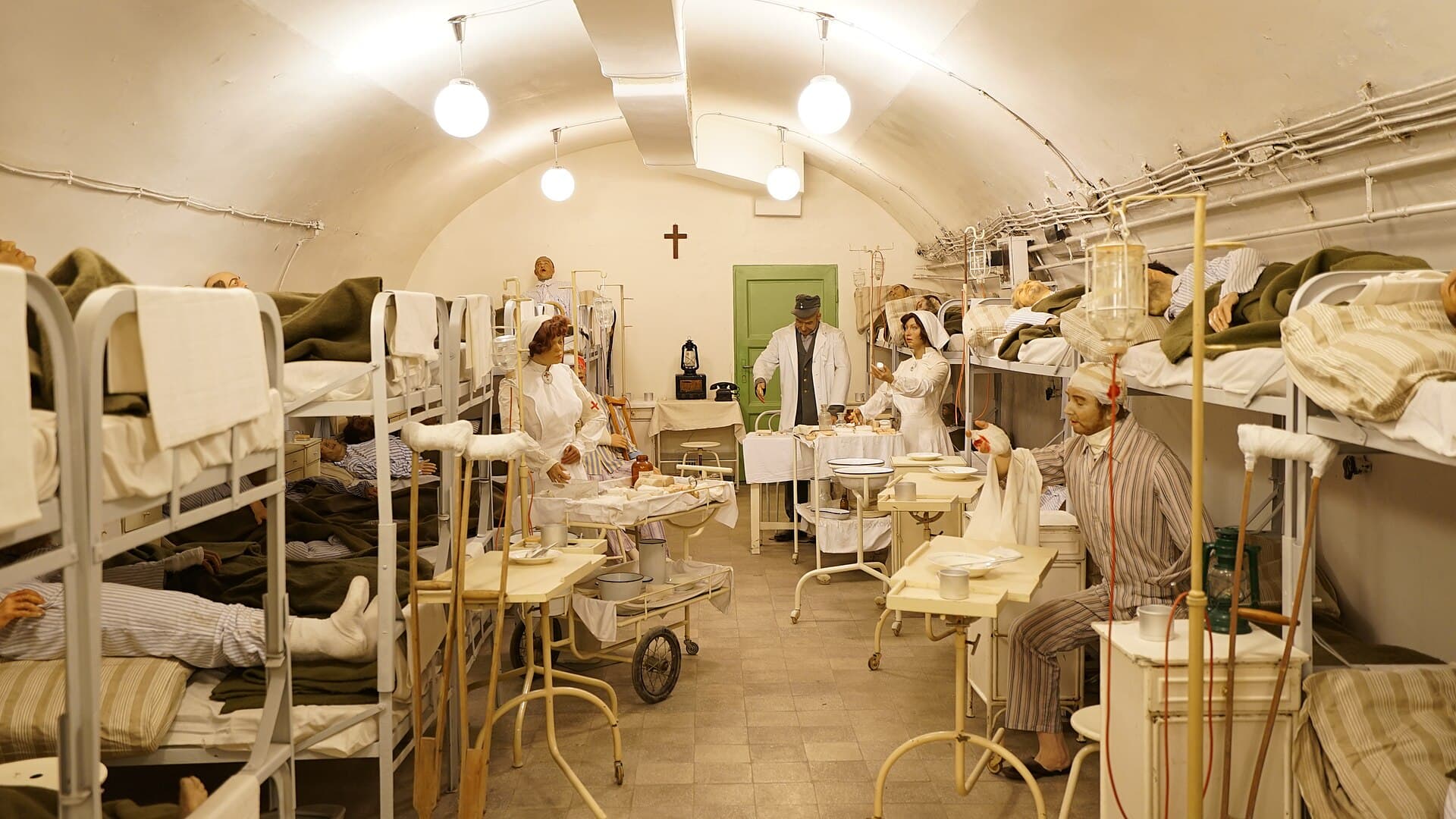
The museum publishes a list of visiting rules that is stricter than almost anywhere else in the city, and worth reading before you buy rather than at the door.
- No photographs, no video, no audio recording. The museum adds, in its own words, that it does not sell photo tickets, so this is not the usual arrangement where a few thousand forint buys you an exemption. If you are the sort of traveller who documents everything, this one hour will be unlike the rest of your trip.
- Children under 6 are not admitted, which the museum explains by pointing to the disturbing and shocking design of the exhibition. Under 12s are discouraged and need a parent or guardian.
- It is a cashless museum. The ticket machines take cards only, and the counter takes only the Hungarian SZÉP card. Turning up with forints in your pocket is not enough.
- Discounts need proof and cannot be stacked. Student rates need a Hungarian or ISIC card, teacher rates need a valid EU teaching card, and promotions do not combine with the discounts above.
- It closes on five days a year: 1 January, 1 November, and 24, 25 and 31 December. Note that it is open on the 26th, which catches people planning around the Christmas markets.
Finding the door
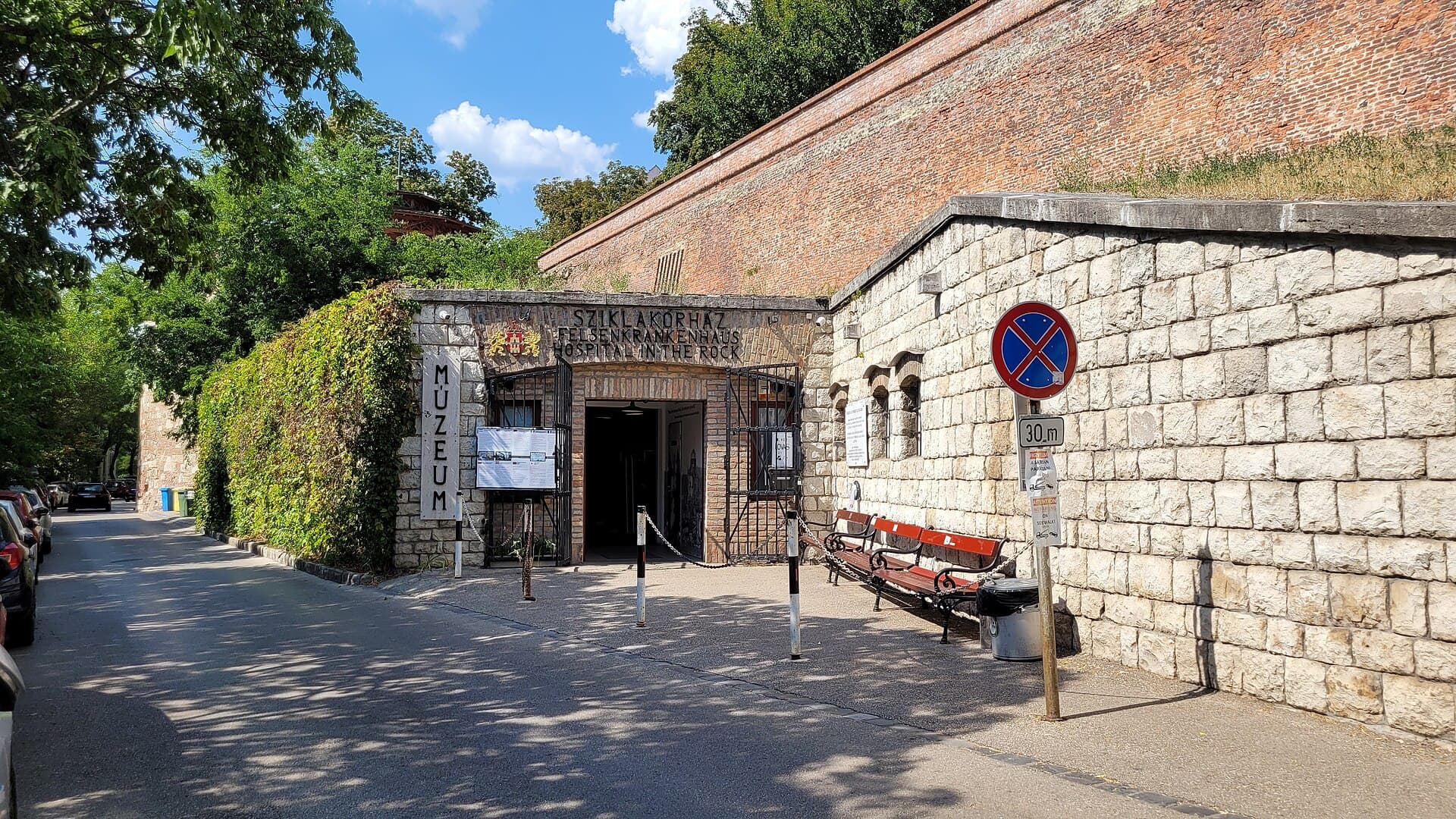
The address is Lovas út 4/c, and the catch is that Lovas Street runs along the bottom of the castle wall, while everything else you have come to see is on top of it. People walk the old town looking for it at street level and never find it.
The museum's own directions are the clearest we have seen, so here they are:
- Start at Matthias Church and follow Szentháromság Street to the Árpád Tóth promenade.
- Opposite the church, at the foot of the castle wall, there is a staircase and a lift down to Lovas Street.
- At the bottom, turn right. The entrance is a few metres along.
That lift is worth noting on its own. It is part of a small network of free ways up and down Castle Hill that hardly any guide mentions, which we set out alongside the funicular in the Buda Castle guide.
Is it worth thirty euros?
We have not taken the tour, so we are not going to tell you it moved us. What we can do is lay out what the price buys against the alternatives on the same hill, and let you decide.
In its favour: it is an hour with a guide rather than a room you walk through, it is the only thing on Castle Hill that deals with the twentieth century at all, and the museum has been the most visited Hungarian museum on TripAdvisor every year since 2015, by its own account, with a 4.6 out of 5 on Google. It was nominated for the European Museum of the Year award in 2014 and 2018.
Against it: at €30 it is roughly three times the Castle Museum, which is 3,800 HUF, and it is the most expensive single ticket on the hill by a wide margin. The photography ban means you leave with nothing. The subject matter is bleak by design, and the museum says so itself.
Our honest read is that this is a ticket for people who want the specific subject, not a default stop on a Castle Hill morning. If you are working out what else is worth paying for up there, we rank the lot in the Buda Castle guide, and against the whole city in things to do in Budapest.
Frequently asked questions
Can you visit the Hospital in the Rock without a guided tour?
No. The museum can only be visited as part of a guided tour, which is included in the ticket price and runs 60 minutes. There is no self-guided option, so you are tied to a departure time rather than dropping in when you pass.
How much does the Hospital in the Rock cost?
The adult tour in English is 30 euros, paid in forints at the National Bank rate. The same tour in Hungarian is 9,500 HUF, which at the September 2026 rate is about 26 euros, so the English tour costs roughly 15 percent more. Reduced rates are 22 euros for seniors over 65 and ISIC students, and 15 euros for children aged 6 to 18.
Can you take photos inside the Hospital in the Rock?
No. Photography, video and audio recording are all prohibited, and the museum states plainly that it does not sell photo permits, so there is no way to pay your way around it. This is why almost every photograph you will find of the interior comes from the museum.
Is the Hospital in the Rock suitable for children?
Children under 6 are not allowed in at all, which the museum attributes to the disturbing and shocking design of the exhibition. Under 12s are not recommended and can only visit with a parent or guardian. The wax figures of wounded patients are realistic.
Do you need to book the Hospital in the Rock in advance?
It is sensible. Capacity is capped at 25 people per tour and the museum says only leftover places are sold on site. When we checked at eight in the morning on a Thursday in September, the 10:00 English tour already had four places left while the Hungarian one had all 25.
Is the Hospital in the Rock the same as the Buda Castle Labyrinth?
No, and they are regularly confused. The Hospital in the Rock is a guided museum on Lovas Street about a wartime hospital and nuclear bunker. The Labyrinth is a separate self-guided cave walk on Uri Street. Neither is the adventure caving sold under Budapest cave tour, which happens in the Buda Hills on the other side of the district.
Is the Budapest Card any use at the Hospital in the Rock?
Only mildly. It gives 10 percent off the normal ticket price rather than free entry, which is a weaker deal than at the Castle Museum a few minutes away, where the card covers entry outright.
How long does the Hospital in the Rock take?
The standard guided tour is 60 minutes and covers the whole museum. Add time for finding the entrance, which sits in the castle wall on Lovas Street and is easy to walk past.
Some links on this page are affiliate links. If you book through them we earn a commission at no extra cost to you. It does not change what we recommend. Full disclosure.