Dohány Street Synagogue: what the ticket includes, and the days it is shut
Prices, closures and departure times read from the operator on 23 September 2026
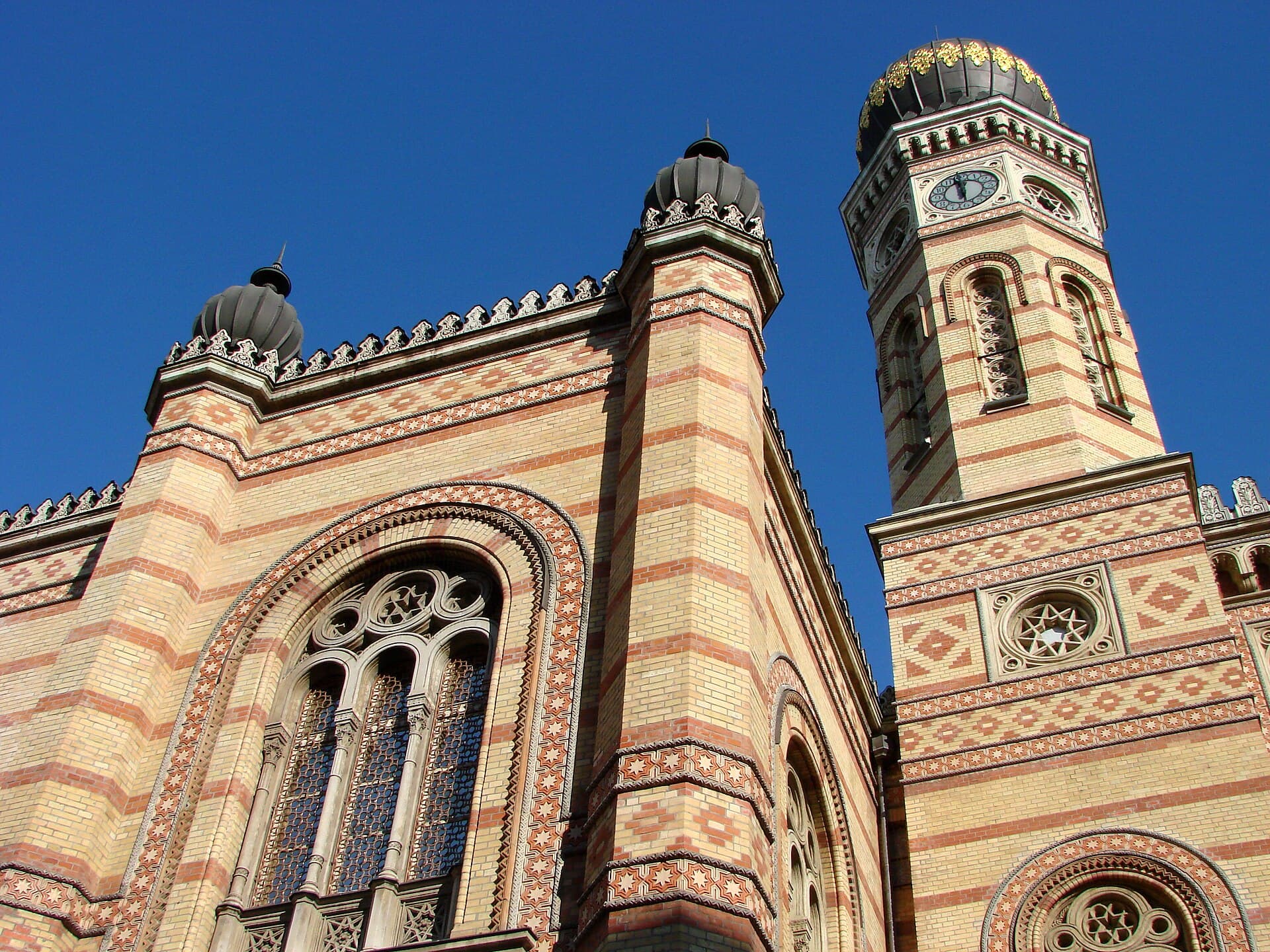
The Great Synagogue on Dohány Street is the largest in Europe and the most expensive single ticket in central Budapest: 14,500 HUF for an adult in 2026, about 40 euros, and 12,000 for a student. What that buys is not one building but six things behind the same wall, plus a free 45-minute guided tour that you can take or skip. It is shut every Saturday, and on a handful of other dates that exist only inside the operator booking calendar. Euros are not accepted at the door. Booking ahead is the rare case where advance costs no more than walking up.
The ticket, side by side
Three things are sold, and the difference between them is not the synagogue, which all three include. It is how much of the district comes with it.
| Programme | Price 2026 | Length | What it adds |
|---|---|---|---|
| Basic admission | 14,500 HUF adult / 12,000 student (about €40 / €33) | 45 min guided, then at your own pace | The whole Dohány complex: synagogue, Jewish Museum, Ghetto Exhibition, Heroes Temple, Wallenberg park, Holocaust cemetery |
| Jewish Quarter | 20,000 HUF adult / 17,500 student (about €55 / €48) | 2 to 2.5 hours | Adds the Rumbach Street Synagogue and a guided walk through the former ghetto, Carl Lutz memorial and Gozsdu Courtyard |
| Private tour | 85 EUR for the guide, plus admission | By arrangement | Your own guide and route. Not sold at the ticket office, request it in advance |
| Group, 10 or more | 30.5 EUR adult / 25.5 student | 45 min guided | Cheaper per head than walking up, but online booking only, never on the spot |
The group rate is worth a second look if you are travelling as an extended family or a small party. Ten adults booking together pay 30.5 euros each against roughly 40 at the door, and the guided tour is still included. It has to be arranged in advance, because the operator states plainly that group discounts are not available at the ticket office.
What 14,500 HUF actually buys
The single most useful thing to understand before you decide is that the ticket is not for a synagogue. It is for a walled complex with six separate things in it, and most people who complain about the price have only seen the first.
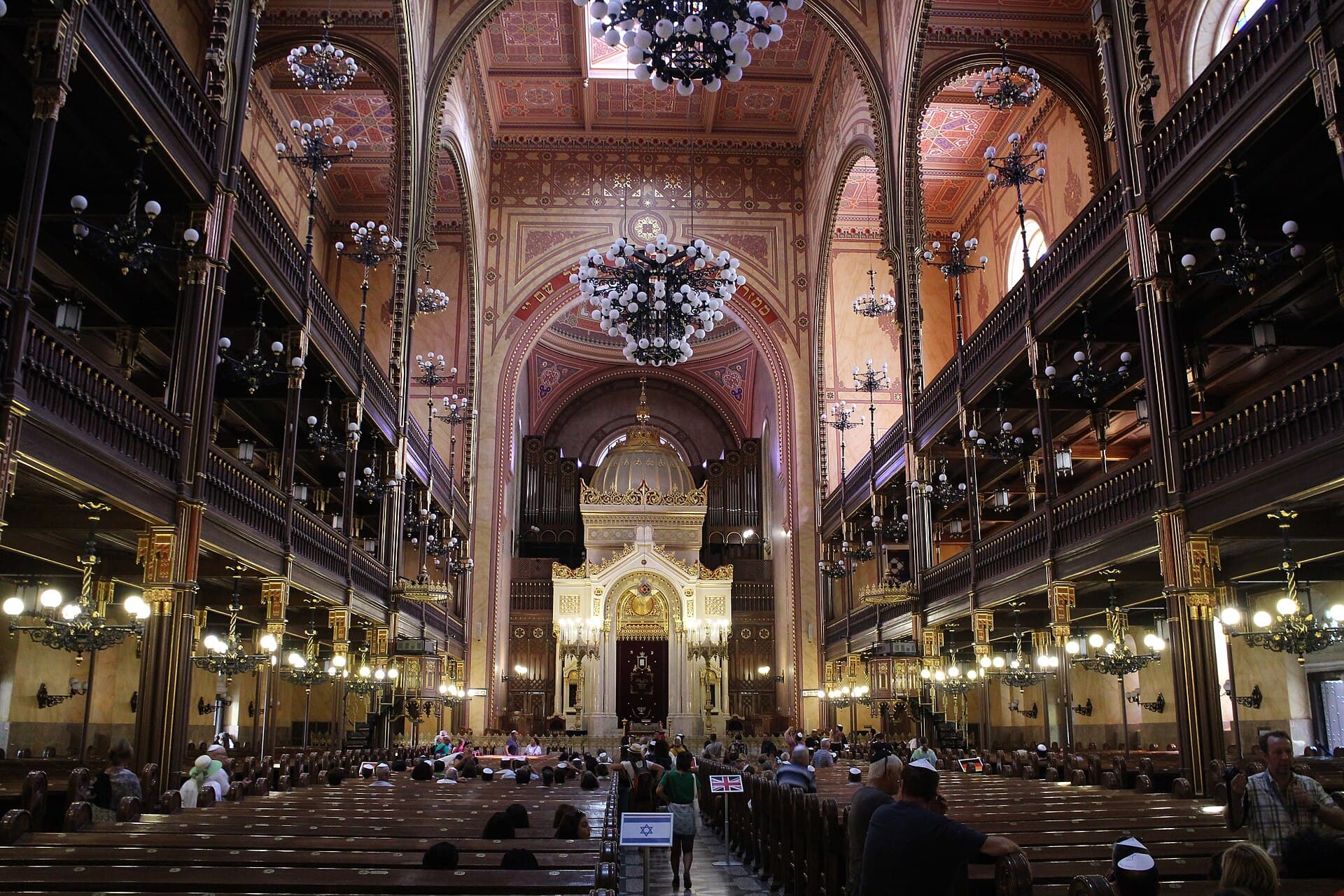
- The synagogue itself. Built in 1859, 3,000 seats, Moorish Revival, and the model that synagogues around the world were designed after. It has an organ, which is unusual, and Liszt played it at the opening.
- The Hungarian Jewish Museum, added onto the arcaded wing in 1931, with a free audioguide and visited at your own pace.
- The Ghetto Exhibition. The end of Dohány Street was the boundary of the Pest Ghetto, which is why the exhibition is here and not somewhere else.
- The Heroes Temple, the smaller synagogue dedicated to the Jewish soldiers who died in the First World War. The operator notes it can be closed for religious use, so this is the one part you might not get.
- The Raoul Wallenberg Memorial Park, with the Emanuel Tree of Life and the Circle of the Righteous Gentiles.
- The Holocaust cemetery and the Forced Labour memorial, in the courtyard.
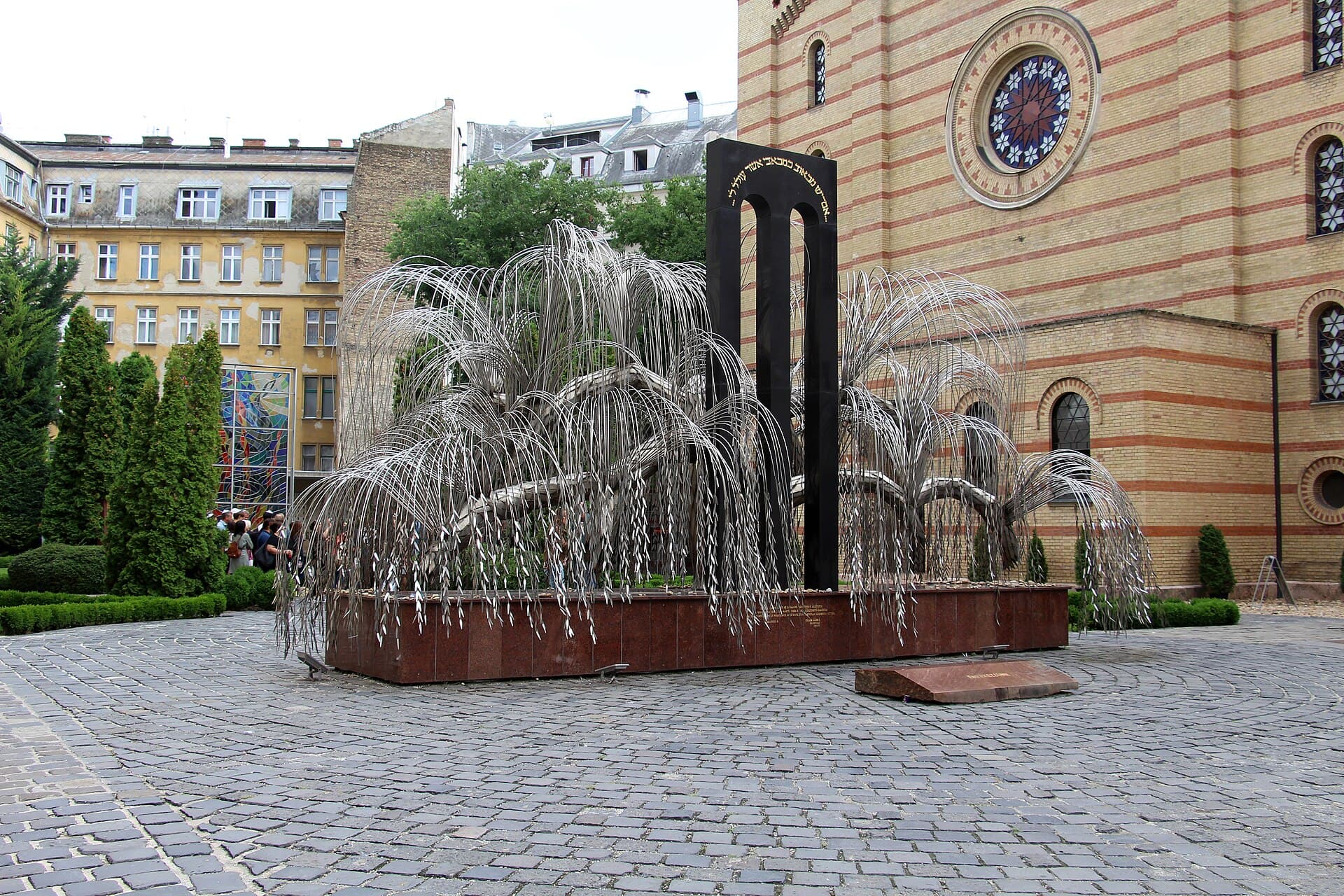
The free 45-minute guided tour is the other thing worth counting. It covers the synagogue, the Wallenberg park, the Heroes Temple, the Righteous Gentiles memorial and the cemetery, and it is led by a guide holding permission from the Hungarian Jewish Community. That permission is not a formality: nobody else may guide inside, and the operator names group leaders, teachers and parents as people who cannot. If you were planning to walk your own group round while reading aloud, you cannot.
Booking ahead, for once at no markup
This site is usually the one telling you to buy at the door, because a reseller adding thirty or eighty per cent to a ticket you could have bought yourself is the norm in Budapest. The Opera House resale runs 79 per cent over box office. The Parliament more than doubles for an EEA passport. Here the arithmetic comes out differently, so we are going to say so.
14,500 HUF is 39.95 euros at 362.98 to the euro, and the same 45-minute programme sells in advance at 39.49. The longer Jewish Quarter programme is 20,000 HUF, or 55.10 euros, against 54.70 booked ahead. Both product codes share the same operator prefix and both match the Basic and Standard programmes the official site describes, inclusion for inclusion, which is our reason for reading them as the operator selling through a third party rather than a reseller with a margin.
What you are buying with the advance booking is not a discount, then. It is the queue and a guaranteed place, and the operator is unusually blunt about why that matters: there are long lines at both the ticket office and the security check, and the security service may limit admission based on the numbers already reserved. That is the operator saying, in its own words, that turning up can fail.

Dohany Synagogue & Hungarian Jewish Museum, priority entry
The Basic programme: priority entry to the whole complex and the free 45-minute guided tour. At €39.49 it is 46 cents under the 14,500 HUF door price rather than over it, which is why we show it. The 4.37 is honest rather than glowing and the recurring complaint in the reviews is the price, not the visit.

Dohany, Heroes' and Rumbach synagogues & Jewish Ghetto tour
The Standard programme, 2 hours 20, and the only way into the Rumbach synagogue between November and March. Better rated than the Basic on a similar sample, and €54.70 against 20,000 HUF at the door. If you are going to pay 40 euros anyway, the extra 15 buys a second synagogue and a guided walk through the former ghetto.
The official price contradicts itself
Search for what this costs and you will find 8,500 HUF, 13,000 HUF, 13.50 euros, 39.82 euros and 14,500 HUF, depending on which page you land on. That is usually a sign of guides copying each other badly. Here it is not.
On the operator own ticket page, two paragraphs apart, sit both of these: "Price: 13,5 EUR/adults; 10 EUR/students" in one block, and "Dohany Great synagogue ADMISSION TICKETS in 2026: ADULTS: 14500 HUF, STUDENTS: 12000 HUF" in the next. At today rate those are 13.50 and 39.95 euros for the same ticket. The source everyone copies from publishes both, and the older, cheaper one reads first.
Take the forint figure. It is the one labelled 2026, it matches what resellers charge, and it carries the operator own note that prices may change without notice. If you see 13.50 euros quoted anywhere, including on the official site, it is the stale block.
This is also why the official site is worth describing rather than linking and moving on. It is a frameset from the late nineties carrying an "under construction" disclaimer, its navigation offers "opening hours" and "closed on" links that lead nowhere, and the page Google ranks for it is a photo gallery. For the largest synagogue in Europe, there is no page anywhere that simply states when it opens.
The days it is shut
Every guide tells you it closes on Saturdays and on Jewish holidays, and then stops, which is useless, because the Jewish calendar moves against the Gregorian one every year. The closures do exist in writing, in exactly one place: the operator booking calendar, which will not let you select a closed date.
Between 23 September and 31 December 2026, these are the days you cannot visit:
| Date | Day | What it is |
|---|---|---|
| 26 Sep, 3, 10, 17, 24, 31 Oct | Saturdays | Shabbat. Every Saturday, no exceptions |
| 7, 14, 21, 28 Nov and 5, 12, 19, 26 Dec | Saturdays | Same |
| 27 September | Sunday | Blocked in the calendar, reason not published |
| 4 October | Sunday | Blocked in the calendar, reason not published |
| 1 November | Sunday | All Saints, a Hungarian public holiday |
| 24 and 25 December | Thursday, Friday | Blocked, although neither is a Jewish holiday |
Two of those are worth flagging because they cut against what you would guess. 23 October is open, even though it is a Hungarian national holiday and the operator warns that national holidays close the synagogues. And 31 December is open while 24 and 25 December are not, which is the opposite of how the rest of Budapest behaves in that week.
We are not going to guess at 27 September and 4 October. The operator blocks them and does not say why. The practical rule is the boring one: open the calendar and click your own date before you plan the day round it, because a Saturday rule you can remember and a moving festival calendar you cannot.
Departure times
Since the opening hours are not published anywhere findable, the usable timetable is the one the booking system exposes: the departure times of the guided tour, which is when the complex is taking visitors in.
On almost every open day the departures are 10:00, 11:30 and 14:30. Nine dates in the window drop the afternoon one and run 10:00 and 11:30 only:
- 25 September and 2 October, both Fridays
- Every Friday from 6 November to 18 December: 6, 13, 20, 27 November and 4, 11, 18 December
The pattern is a winter pattern rather than a Friday pattern, and the Fridays in between keep all three. Shabbat starting earlier as the year closes in is the obvious reading, and it is a reading rather than something the operator states. What matters for planning is simpler: on a winter Friday, the synagogue is a morning.
English is guaranteed on every departure. Other languages depend on who is working that day, and inside you will see small flags on stands marking where each language group gathers.
Rumbach closes on 1 November
The Rumbach Street Synagogue, a few minutes away and the prettier of the two to many people, has a seasonal rule that matters if you are here in winter. Between 1 November and 31 March, and the operator notes the dates can move, Rumbach is closed except on Sundays, and in that window it can only be entered on the longer Jewish Quarter programme.
So the choice between the two tickets changes with the season. In summer, the Basic programme plus a separate Rumbach visit is a real option. From November, if you want Rumbach on any day other than a Sunday, the 20,000 HUF programme is not the upgrade, it is the only door.
At the door
The synagogue is at Dohány utca 2, on the corner where District VII meets the Small Boulevard, two minutes from Astoria (M2) and Deák Ferenc tér (M1, M2, M3). If you are walking from the Shoes on the Danube Bank, it is about twenty minutes east, and the two are the obvious pair for a morning.
- Forints or card, not euros. The operator states it plainly: payment on the spot is in Hungarian forints or by credit card, and euros are not accepted. Budapest is generally relaxed about this. Here it is a rule.
- Priority tickets, private tours and group rates are not sold at the ticket office. If you want any of those, it has to be in advance.
- There is a security check with its own queue, separate from the ticket queue.
- Heads are covered inside. The operator publishes no dress code, so we are telling you what is visible rather than what is required: men inside the hall wear the paper caps, and it is an active congregation rather than a museum.
Is it worth 14,500 HUF?
It is the question the search results do not answer. The top of Google gives you the ticket seller three times, Wikipedia, a photo gallery and an app promotion, and the nearest thing to a straight answer sits in a Facebook group on the second page, where somebody warns that it costs about 34 dollars for two people and that the visit is mostly about the Second World War.
That complaint is half right, and the half that is wrong is the useful part. Forty euros for a church interior would be indefensible. Forty euros for a synagogue, a museum, an exhibition, a second synagogue, a memorial park, a cemetery and an hour of a trained guide is a different calculation, and it is the calculation almost nobody makes because the ticket is sold as if it were for one building.
Where we would spend the money instead:
- If you have half a day and any interest in the subject, take the 20,000 HUF programme rather than the 14,500 one. The extra 15 euros buys the Rumbach synagogue and two hours of context in the streets outside, and the reviews are better.
- If you have an hour and a tight budget, skip it and walk the district instead. The ruin bars occupy the same streets, the Carl Lutz memorial and the Gozsdu Courtyard cost nothing, and the Shoes on the Danube Bank is free and says a great deal in ten minutes.
- If you are going anyway, do not skip the free guided tour to save time. It is already paid for, it is the only guiding allowed inside, and without it the Wallenberg park is a metal tree in a courtyard.
One last piece of planning, because it catches people out: this is the single most expensive ticket in the centre, so if you are stacking paid interiors into one day, the running total climbs faster here than anywhere else, and our itineraries put the synagogue on the ruin bar day for exactly that reason.
Frequently asked questions
How much is a ticket to the Dohány Street Synagogue?
For 2026 the operator lists 14,500 HUF for an adult and 12,000 HUF for a student, which is about 40 and 33 euros. That makes it the most expensive single ticket in central Budapest. The same page also carries an older block quoting 13.5 euros, which is out of date.
What does the synagogue ticket include?
Six things inside one walled complex: the synagogue itself, the Hungarian Jewish Museum with a free audioguide, the Ghetto Exhibition, the Heroes Temple synagogue, the Raoul Wallenberg Memorial Park with the Emanuel Tree of Life, and the Holocaust cemetery. A free 45-minute guided tour is included and optional.
Is the Dohány Street Synagogue open on Saturdays?
No. It is shut every Saturday for Shabbat, without exception, and also on Jewish religious and Hungarian national holidays. Between 23 September and 31 December 2026 the operator booking calendar also blocks Sunday 27 September, Sunday 4 October, Sunday 1 November and both 24 and 25 December.
What time do the guided tours start?
On most days the English-guaranteed departures are 10:00, 11:30 and 14:30. Nine dates in the autumn drop the 14:30: 25 September, 2 October, and every Friday from 6 November to 18 December. Checked in the booking calendar on 23 September 2026.
Can you pay in euros at the synagogue?
No. The operator states that payment on the spot is in Hungarian forints or by credit card and that euros are not accepted. Priority tickets, private tours and group discounts are not sold at the ticket office either, only online in advance.
Do you need to book the synagogue in advance?
It is worth it, and unusually it costs nothing extra: the advance price matches the door price to within half a euro. The operator warns that queues form at both the ticket office and the security check, and that the security service may limit admission based on how many people have already booked.
Can I bring my own guide into the synagogue?
No. Only guides holding permission from the Hungarian Jewish Community may guide inside, and the operator says explicitly that group leaders, teachers and parents cannot. That is why the free 45-minute tour is included rather than sold.
Is the Rumbach Street Synagogue open in winter?
Between 1 November and 31 March, and the operator notes the dates can move, Rumbach is closed except on Sundays, and in that window it can only be visited on the longer Jewish Quarter programme rather than on its own.
Some links on this page are affiliate links. If you book through them we earn a commission at no extra cost to you. It does not change what we recommend. Full disclosure.