Heroes' Square, Budapest: Free, 20 Minutes, and What the Rest of City Park Costs
Updated 19 September 2026 · Prices read from each venue's own site, several of which publish them only in Hungarian
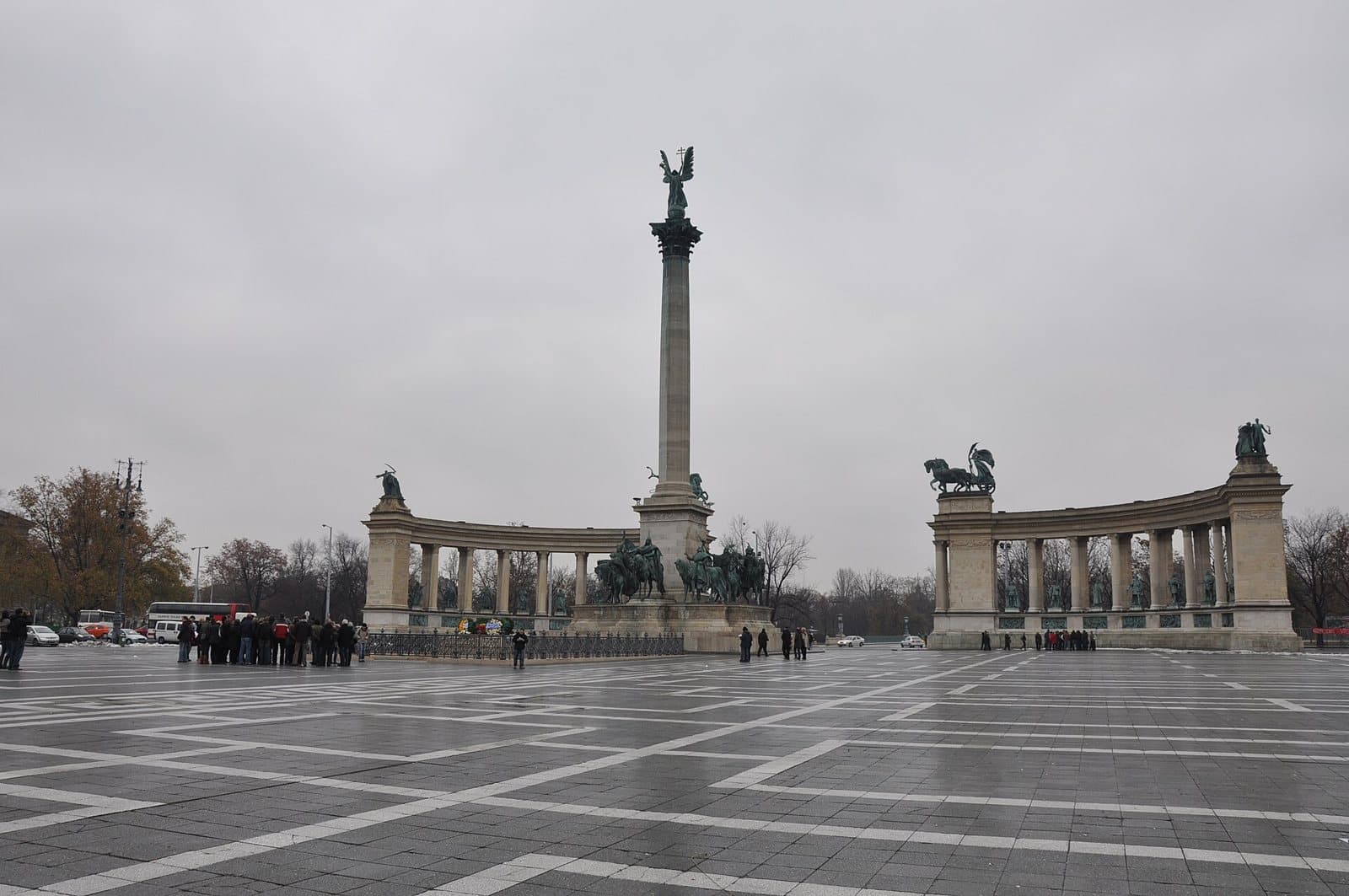
Every guide to Heroes' Square will tell you who the statues are. Almost none will tell you the two things you actually need to plan around: it is free and it takes about twenty minutes, and everything that turns it into an afternoon is a few minutes further into the park and costs money.
This page is mostly the second half of that.
- Free, always, no ticket exists. Open square, no gate, no hours.
- Twenty minutes is honest. Ten if you are only photographing it.
- Everything else in City Park is ticketed, and all of it in one day comes to about 31,600 forint, near 87 euros.
- On Mondays every museum here is shut. One exception, and it costs 500 forint.
- The statues were swapped as the politics changed. Five Habsburgs came down.
The visit itself, and how long it takes
Heroes' Square is a public square. There is no gate, no ticket desk and no closing time, and no ticket for it exists anywhere in the world. If something online offers you a Heroes' Square ticket, it is selling you a tour that walks across it.
What is there: a 36-metre column with the Archangel Gabriel on top, holding the Hungarian crown; a bronze group of Grand Prince Arpad and the seven chieftains of the Magyars at its foot; and two curved colonnades holding fourteen statues of kings and leaders, each with a relief beneath it showing a scene from their reign. In front of the column sits the Memorial Stone of Heroes, usually with wreaths on it.
Twenty minutes covers it properly: enough to walk both colonnades and read who is who. Ten if you only want the photograph. It is genuinely impressive and it is genuinely not an afternoon, and pretending otherwise is how people end up standing in a large empty square wondering what they are supposed to do next.
The answer to that is the park behind it, which is where the rest of this page goes.
What is around it, and what it all costs
The square is the doorway to City Park. The Museum of Fine Arts stands on one side of it and the Hall of Art on the other, and a few minutes' walk in are Vajdahunyad Castle, the zoo and Szechenyi Baths. Here is what each of them charges, which as far as we can tell nobody else has put in one place.
| Place | Adult | Reduced | Closed |
|---|---|---|---|
| Heroes' Square | Free | Free | Never. It is a square |
| Museum of Fine Arts | 5,800 HUF (€15.98) | 2,900 HUF | Mondays. Last entry 17:00 |
| Hall of Art (Mucsarnok) | 2,900 HUF (€7.99) | 1,450 HUF | Mondays. Open to 20:00 on Thursdays |
| Vajdahunyad, the museum inside | 3,600 HUF (€9.92) | 1,800 HUF | Mondays |
| Vajdahunyad gatehouse tower | 500 HUF (€1.38) | 500 HUF | Never. Open 09:00 to 19:00 daily |
| Vajdahunyad Apostles' Tower tour | 1,500 HUF (€4.13) | 1,000 HUF in groups | Mondays |
| Vajdahunyad, combined ticket | 5,000 HUF (€13.77) | 2,500 HUF | Mondays |
| Budapest Zoo | 5,900 HUF (€16.25) | 4,200 HUF children 2-18 | Open daily |
| Szechenyi Baths | 12,000 HUF (€33.06) | Monday to Thursday rate | Open daily |
Two things fall out of that table. The first is the total: doing every paid thing in City Park in a single day costs about 31,600 forint, near 87 euros a head, which is not a day most people have planned for. A more realistic version is Vajdahunyad's combined ticket plus an afternoon at Szechenyi, which is 17,000 forint, about 47 euros.
The second is that the cheapest paid thing here costs 500 forint, and it is the one worth knowing about.
The Monday rule, and the 500-forint exception
On a Monday, every museum around Heroes' Square is closed. All of them. The Museum of Fine Arts, the Hall of Art and the museum inside Vajdahunyad all take Monday off. If your one free day in Budapest is a Monday and your plan was the City Park museums, the plan needs changing.
What is still open on a Monday: the square, the park, the zoo and Szechenyi.
And one more, which is the useful part. Vajdahunyad's gatehouse tower opens every day of the week, from 09:00 to 19:00, and costs 500 forint. That is about a euro forty. It is the cheapest ticket in the park, it has the longest hours of anything here by a distance, and it is open precisely when everything else is shut. The museum's own site notes that the last ticket goes on sale fifteen minutes before closing.
We found this on the Hungarian-language page of the Museum of Hungarian Agriculture, which is the institution that occupies the castle. It is not on the English pages, which is probably why no English guide mentions it.
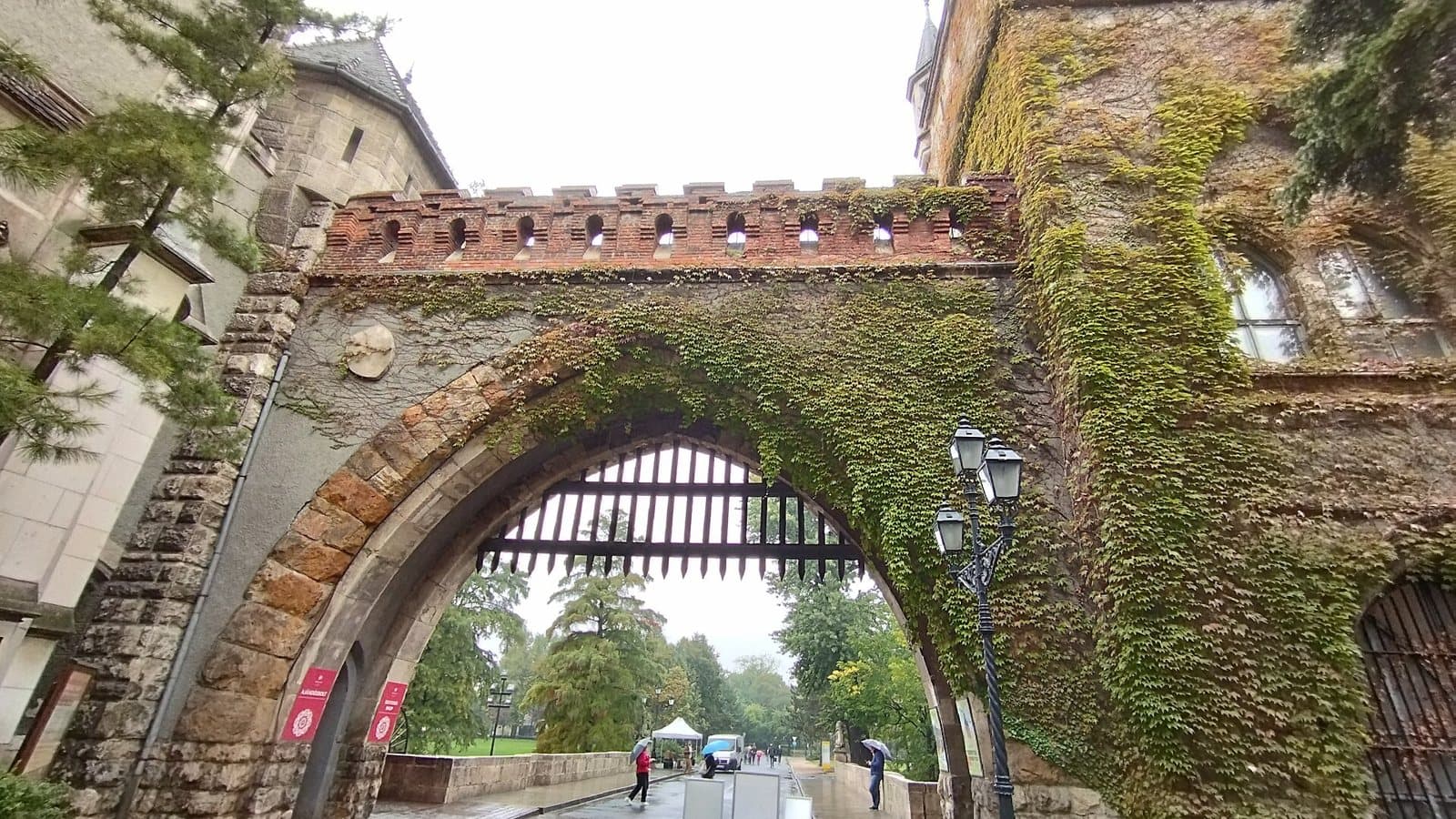
One more warning while we are on Vajdahunyad, because it is the same trap we found at St Stephen's Basilica. Its family ticket can cost you more than buying separately. The combined family ticket covers two adults and two children for 12,500 forint. But children under six get in free, so a couple with two small children pays 12,500 forint for what would cost 10,000 bought individually, which is 2,500 forint thrown away. With children between six and twenty-six it works the other way and the family ticket saves you 2,500. Count the ages before you reach the desk.
The zoo's family tickets, for what it is worth, all genuinely save money, from 1,000 forint on one adult and one child up to 2,700 on two and two. It has its own oddity though: a baby ticket at 400 forint is compulsory for children under two.
The two buildings on the square, and which one to pick
The square is flanked by a matching pair, and they are not remotely the same kind of visit. If you only have time for one, the difference matters more than the price does.
The Museum of Fine Arts, on the left as you face the monument, is the heavyweight: a permanent collection, and the more expensive ticket at 5,800 forint. Being a permanent collection, you broadly know what you are buying before you go. Its trap is the clock. It closes at 18:00 but the cash desk and last entry are at 17:00, a full hour earlier, and the galleries start closing from 17:30. Arriving at half past four is arriving too late to be worth 5,800 forint.
The Hall of Art, or Mucsarnok, on the right, is the opposite proposition. It is a contemporary exhibition space with no permanent collection, and you can see that in how it sells tickets: its price list is published under the name of whatever show is currently hanging. So check what is on before you decide, because the building is not the point, the exhibition is. At 2,900 forint it is half the price of its neighbour, and it has the one genuinely useful opening hour in the park: on Thursdays it stays open until 20:00 rather than 18:00, with last entry at 19:30.
That Thursday evening is worth building a plan around. It is the only thing around this square that is open after six, and it pairs neatly with Szechenyi afterwards, which keeps much later hours.
The statues, and the five that were taken down
Here is the part the history sites cover and the travel guides skim, and it is more interesting than either lets on. The statues on this monument were changed to match whoever was in power.
When the monument was designed in the 1890s, Hungary was part of the Austro-Hungarian Empire, and the last five places on the left colonnade were reserved for Habsburg rulers: Ferdinand I, Charles III, Maria Theresa, Leopold II and Franz Joseph, the last of them still on the throne while his own statue was being carved. During the twentieth century all five came down and were replaced by leaders of Hungarian independence struggles.
Who is there now, on the right-hand colonnade:
- John Hunyadi, who stopped the Ottoman advance at Belgrade in 1456.
- Matthias Corvinus, shown surrounded by his scholars rather than his armies, which tells you how he is remembered.
- Stephen Bocskai, Gabriel Bethlen and Emeric Thokoly, the Transylvanian princes who fought the Habsburgs.
- Lajos Kossuth, calling the country to arms in 1848.
The reliefs underneath are worth two minutes each. The one under Coloman shows him prohibiting the burning of witches in 1100, which is not the sort of thing most national monuments choose to commemorate.
The monument took a long time to become itself. Construction started in 1896 for the thousandth anniversary of the Hungarian conquest, was mostly finished by 1900, and when it was inaugurated in 1905 only five of the planned statues had actually been completed. The Archangel Gabriel on top, by Gyorgy Zala, won the Grand Prix at the Paris Exposition of 1900 before it was ever installed here.
If the question of who gets to decide the national story interests you, it is still live in Budapest: the museum a few minutes down Andrassy was closed this month while its exhibition went under review, which we cover in the House of Terror guide.
The thing almost everyone gets wrong
The flat stone in front of the column, the one with the wreaths, is the Memorial Stone of Heroes. It is very commonly described, in guidebooks and by guides, as the Tomb of the Unknown Soldier.
It is not a tomb and nobody is buried under it. It is a memorial stone. The confusion is old enough that the encyclopaedia record flags it explicitly. Worth knowing before someone tells you otherwise with great confidence.
Getting there, and when to go
| Detail | |
|---|---|
| Metro | M1, the yellow line, to Hosok tere. It comes up at the square |
| Trolleybus | 72, 75 and 79 stop nearby |
| Opening hours | None. It is an open square |
| Cost | Nothing, and no ticket exists |
| Time needed | 20 minutes, or 10 for photographs |
| Quietest | Early morning, before the coach groups |
| Best light | Late afternoon on the colonnades |
Practically, the square works best as the hinge of a day rather than a destination: down Andrassy from the centre, twenty minutes here, then into the park. The Opera House and the House of Terror are both on that avenue, and our Budapest itinerary walks the whole line in one afternoon.
The embassy on the square, and why 2026 matters
One building on the square is easy to walk past. Facing the monument, on the Andrassy side, stands the embassy of Serbia, formerly the Yugoslav embassy. In 1956, after the Soviet intervention crushed the Hungarian revolution, Imre Nagy took refuge inside it. He was later removed, tried and executed.
That matters this year more than most. 2026 is the seventieth anniversary of the 1956 revolution, which is why arguments about how Hungary remembers that year have been unusually loud. The anniversary falls on 23 October, a national holiday, and the commemorations are likely to be larger than usual.
If you are in Budapest on that date, two things worth knowing that have nothing to do with this square: the Parliament interior and the upper towers of Fisherman's Bastion are both free to enter on 23 October. Both are covered in our things to do in Budapest guide.
Frequently asked questions
Is Heroes' Square free?
Yes, entirely. It is an open public square with no gate, no ticket and no opening hours, and no ticket for it exists anywhere. Anything sold online as a Heroes’ Square ticket is a tour that passes through it.
How long do you need at Heroes' Square?
About twenty minutes to walk the colonnades and read the statues, or ten if you are only taking photographs. It is not an afternoon on its own, which is why it is worth knowing what else is within a few minutes of it.
What is there to do around Heroes' Square?
The square sits at the entrance to City Park. The Museum of Fine Arts is on one side and the Hall of Art on the other, and a few minutes further in are Vajdahunyad Castle, the zoo and Szechenyi Baths. Everything except the square itself is ticketed, and the total for all of it in one day comes to about 31,600 forint, roughly 87 euros.
Is anything open around Heroes' Square on a Monday?
The square and the park are, and so are Szechenyi Baths. The Museum of Fine Arts, the Hall of Art and the museum inside Vajdahunyad all close on Mondays. The exception worth knowing is Vajdahunyad’s gatehouse tower, which opens every day of the week from 09:00 to 19:00 and costs 500 forint, about 1.40 euros.
How do you get to Heroes' Square?
The M1, the yellow line, runs the length of Andrassy Avenue and its Hosok tere stop comes up at the edge of the square. Trolleybuses 72, 75 and 79 also stop nearby. The M1 is itself the oldest underground line on the European continent, so the journey is part of the visit.
Why are some of the statues different from the original ones?
Because the monument was rebuilt to match the politics of the day. The five statues at the end of the left colonnade were originally Habsburg rulers, and they were replaced during the twentieth century by leaders of Hungarian independence struggles: Bocskai, Bethlen, Thokoly and Kossuth. The square has been reshaped by every political system that has governed it.
Is the stone in front of the monument the Tomb of the Unknown Soldier?
No, although it is very often called that. It is the Memorial Stone of Heroes, a memorial rather than a grave. Nobody is buried under it.
What is the best time of day to visit?
Early morning if you want the square without coach groups, which arrive through the middle of the day. It faces roughly south-west down Andrassy, so late afternoon light falls on the colonnades. It is also lit at night and stays open, being a public square.